
Chongqing, China
Chongqing is located in the Sichuan Province
Built in layers on mountain geography, it’s urban area is home to about 22 million people
It’s best known for its cyberpunk skyline and spicy hot pot
Chongqing is a city built on mountainous terrain where two rivers merge. Undergoing rapid development after 1997, its neon skyline has gotten it nicknamed as China’s “Cyberpunk City”, making it a hotspot for foreign and domestic tourists alike.
Built in layers and levels up and down slopes, there are places where you can be at street level on one side of a building but on the 22nd floor on the other. Combined with its fiery cuisine and dishes loaded with intense and delicious flavors, it is a great city for those with a camera who like spicy food - like myself.
I’ll share the places and experiences I’ve had in Chongqing here in case you’re looking for travel ideas.
If you want to get a feel for Chongqing, I made a video of my first visit:
Things to keep in mind
Traveling to China can be challenging because many common websites and services are blocked, they utilize completely different but necessary apps, are basically cashless and credit card-less, and there’s often little English support available.
Here are my recommendations for people to do when visiting China:
Before visiting, get an eSim like the unlimited data plans on Airalo and install it (Save US $3 on your first purchase)
Before visiting, Get a VPN such as ExpressVPN (I’ve used it in China and it’s great because it’s easy)
Before visiting, download Alipay, go through the authentication process, and connect your payment account (This is how you’ll see menus, order items, pay for everything, ride the subway, call a DiDi rideshare taxi, etc.)
Option: Download WeChat and do the same (It’s good to have a backup but their in-app translation isn’t really good)
Option: Download their rideshare taxi app DiDi (you can also just use their miniapp within Alipay)
Download Amap (Google Maps is useless)
Before visiting, register your arrival with the National Immigration Administration and print out your QR code
Make sure you carry your passport at all times (it’s also your ticket for high-speed rail, etc.)
About Chongqing
Chongqing is primarily built at the intersection of the Yangtze River and the Jialing River. Its geography is mountainous, and the city is built on layers up and down steep slopes that are not always visible due to the numerous skyscrapers and dense building layout.
History & culture
Chongqing’s history spans over 3,000 years, beginning with the Ba Kingdom in 11th Century BCE. It later became a wall of resistance against the Mongol Empire for over 36 years in the 13th Century. More recently, it served as China’s wartime capital during the Second Sino-Japanese War, and as a result, was the target of heavy bombing by Imperial Japan between 1938 to 1943.
This resilience impacted the local culture. Chongqing people are known for being resilient, loudly expressive, and direct. Even to those like me who don’t speak or understand Chinese, it’s easy to notice.
Their cuisine is famous for being very spicy, often reddish in color and loaded with peppers. As a lover of Sichuan cuisine, Chongqing’s food was the main reason that I wanted to visit the city.
Modern day
Although some report that it’s now the world’s biggest city with over 31 million people, that number is the total population of the entire administrative region, which is about the size of Austria.
Chongqing’s population depends on how you count. The municipality and major urbanized districts are said to have around 22 million people, and the central urban commuter core is said to have between 11 and 18.5 million people.
The city grew into the metropolis that it is today after China separated it from Sichuan province’s administration and designated it as a directly controlled municipality in 1997, like Beijing and Shanghai. It’s only the 4th city managed in this way. Since then, Chongqing rapidly grew and the result is a dense city with one of the world’s most striking evening skylines.
How to get there
Chongqing Jiangbei International Airport (CKG) is the primary airport. It’s located 11.8 mi / 19 km north of central Chongqing. The easiest way to get to your hotel will be by DiDi. Follow the signs outside, walk straight and the pick-up area will be down an escalator to the left.
The city is also accessible via high-speed rail, and its main stations are Chongqing East, Chongqing North, and Chongqing West.
Once you’re in the city, the best way to get around depends on where you’re going, but it’ll be a mix of catching the subway, taking a DiDi, or walking.
Where I stayed
The ideal place to stay in Chongqing is near the tip of the Yuzhong peninsula. Many of the popular sites are located nearby or are easily accessible from there, whether you want to catch a subway, DiDi taxi, or walk.
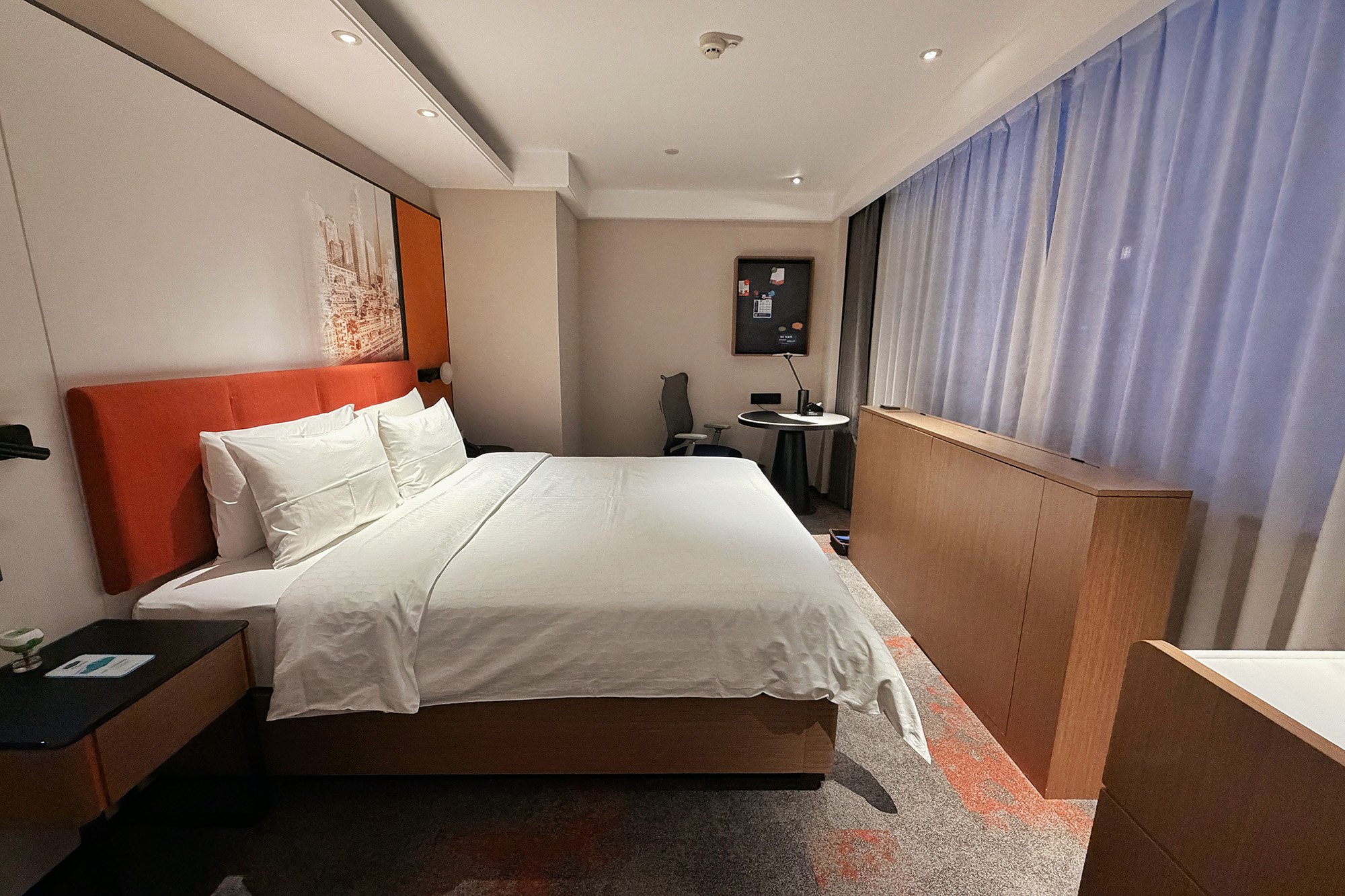
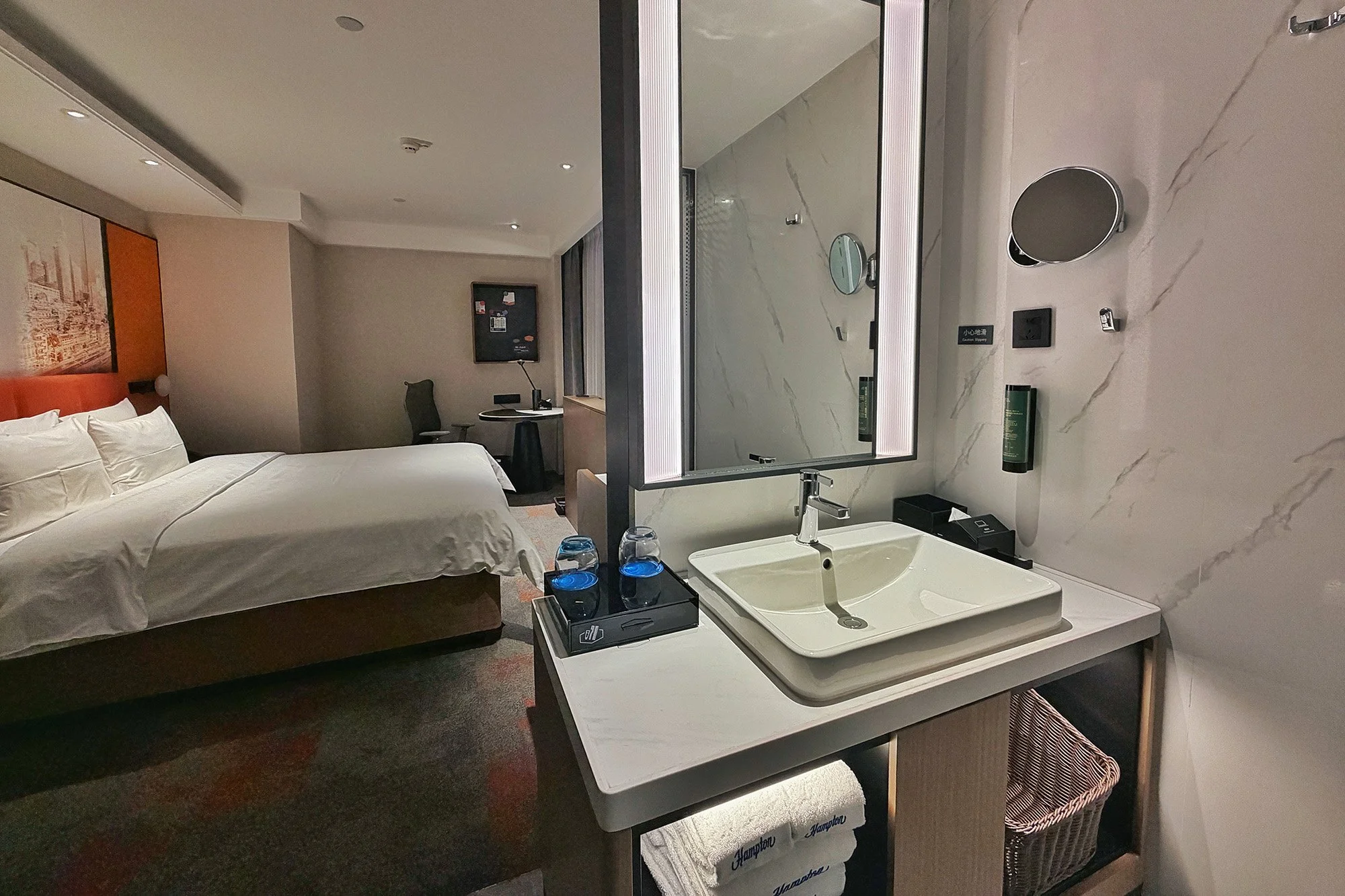
I stayed just about at the tip at the Hampton by Hilton Chongqing Jiefanbei. It was extremely convenient, just about a block away from Raffles City Shopping Mall and subway line 1.
The rooms, service and breakfast buffet were fine. However, there were only 2 elevators and they’d take a really long time and get crowded, the halls smelled like cigarette smoke, and the toilet and shower doors were a bit odd as they were frosted more towards the middle and upper parts and less towards the bottom.
I can’t confirm if other hotels in this price range are similar. The Hampton by Hilton Chongqing Jiefanbei was very convenient, but there are those issues that you may need to be okay with. You can search hotels in the area here:
Things to do
Depending on what you’re aiming to do and how fast you get through things, I’d recommend spending at least 2 full days in Chongqing. For reference, we got in at night, had 2 full days to explore, and then left early the next afternoon.
Bayi Haochi Street
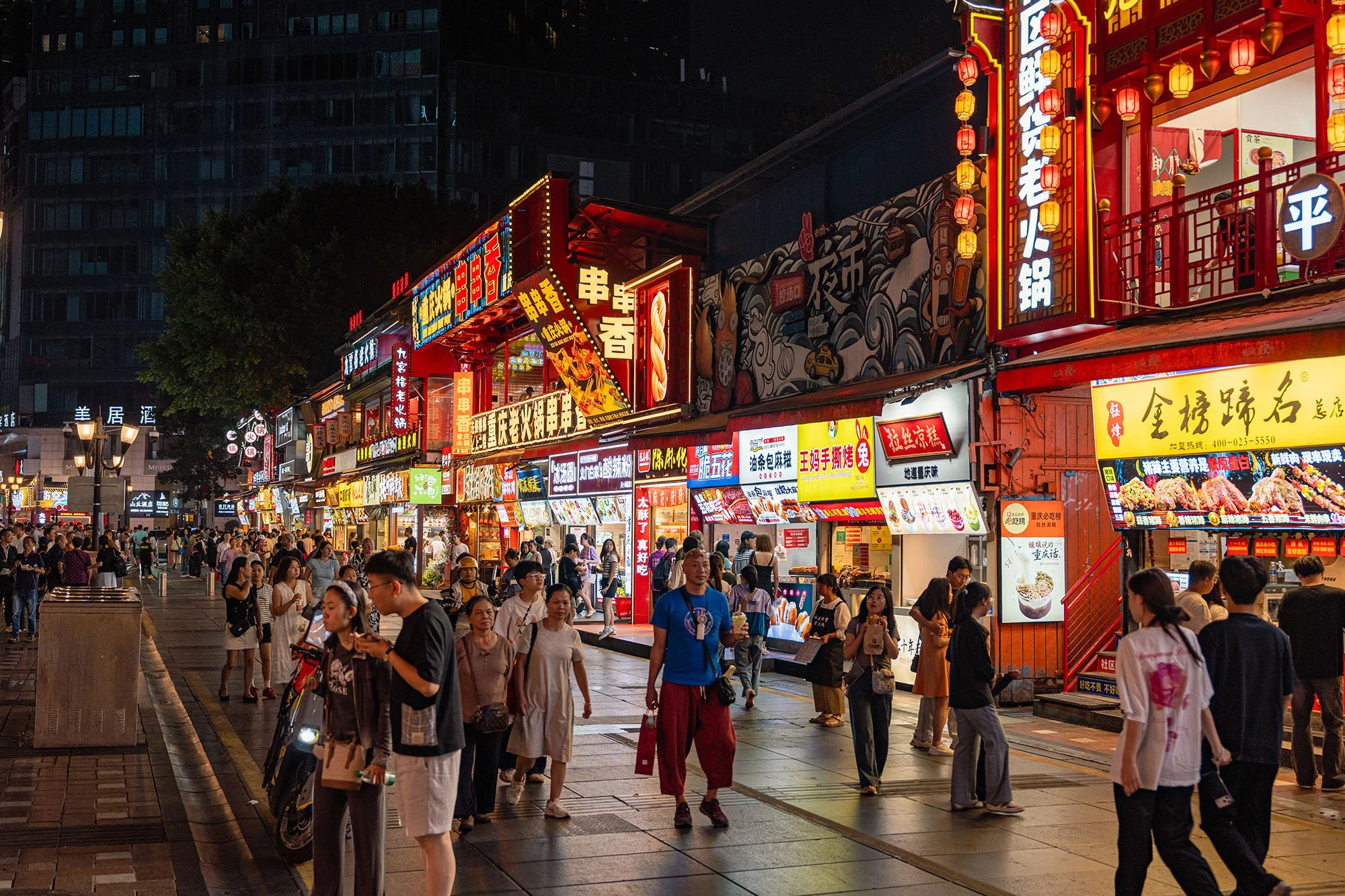
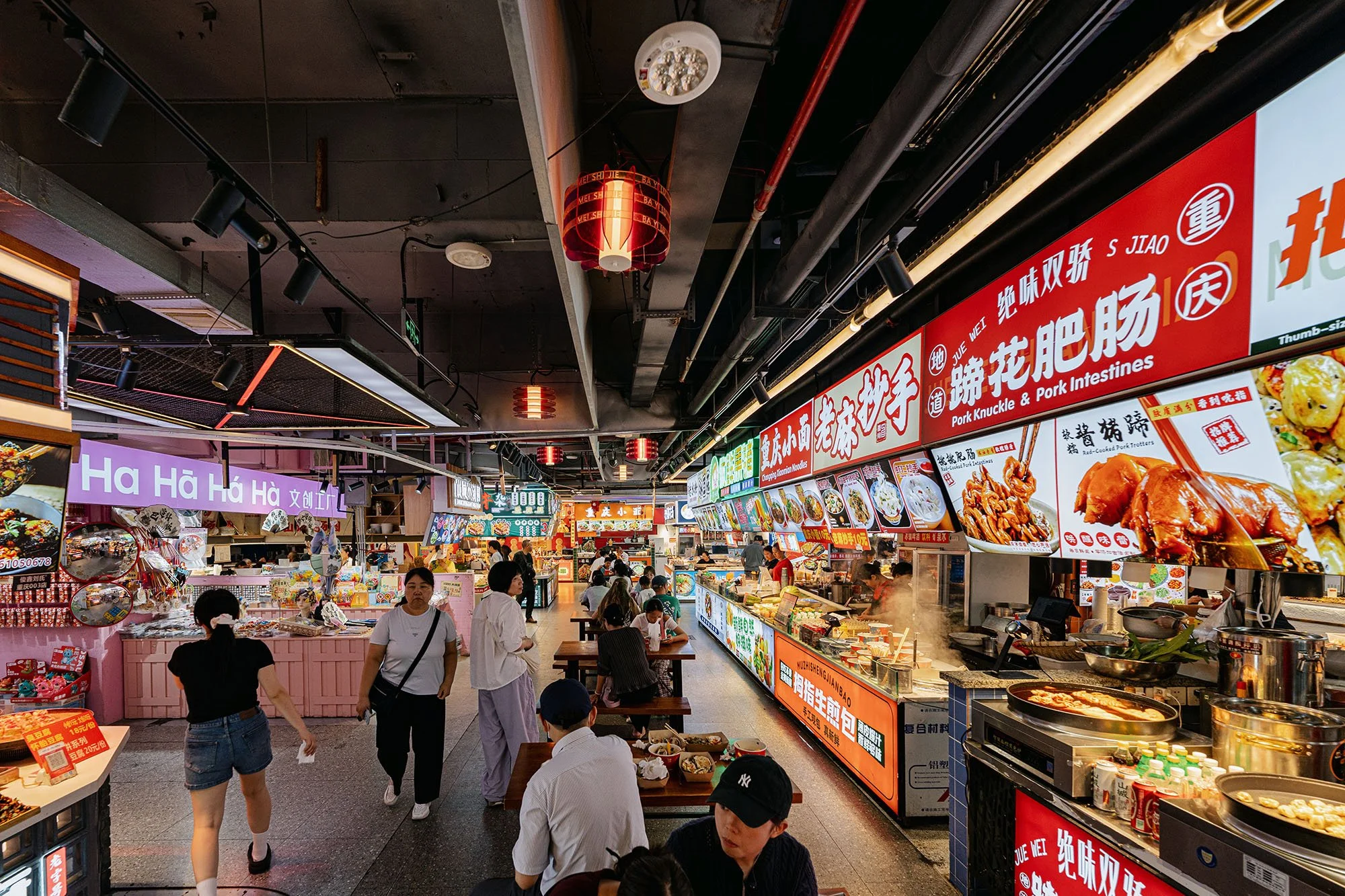
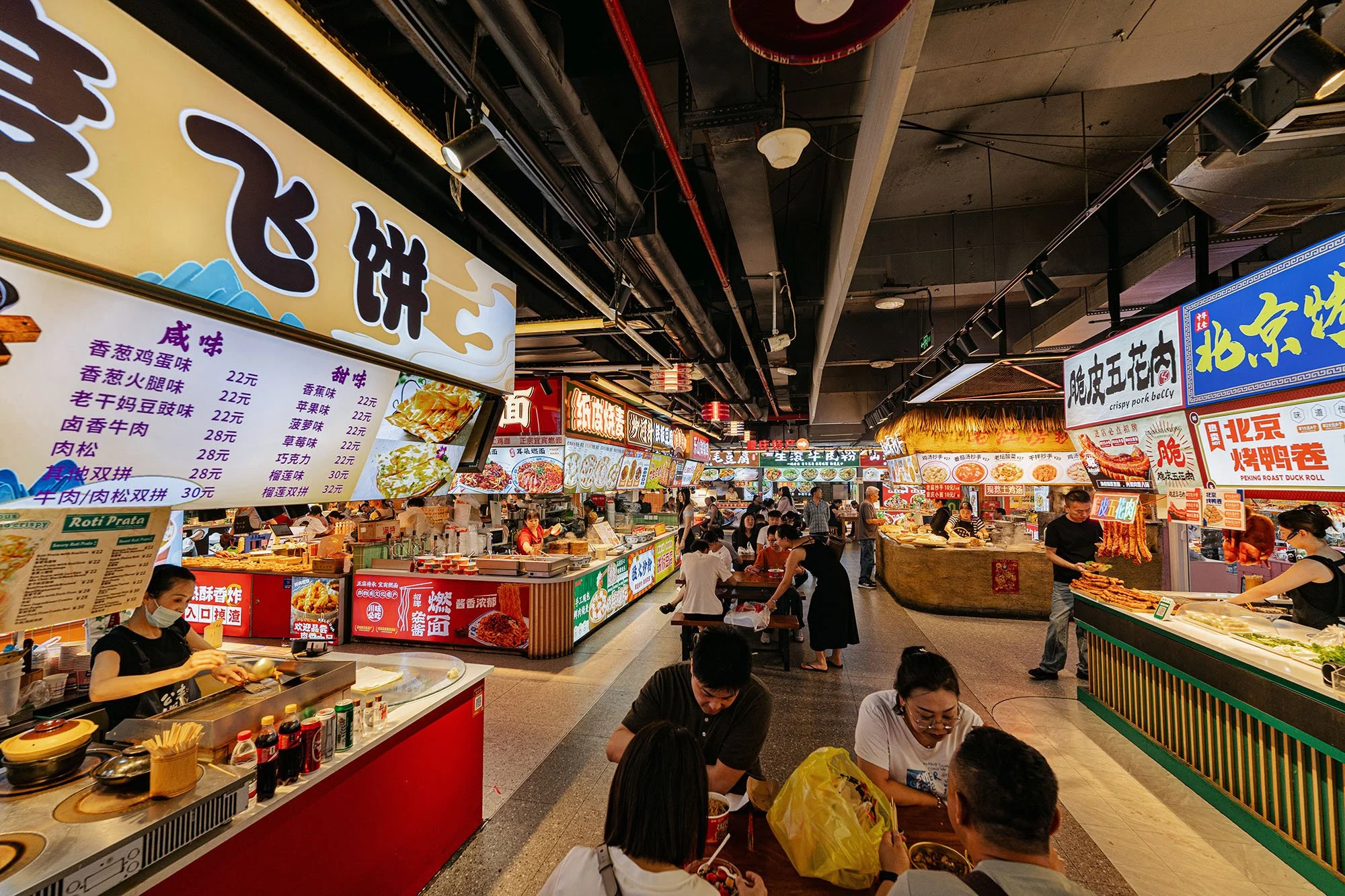
Trying different kinds of local and regional foods is one of the exciting things about traveling. Bayi Haochi Street (八一路好吃街) may be the best place to do it in Chongqing. It’s a street that extends a few blocks for about 448 yards / 410 meters, mostly blocked off to cars and featuring a large number of food options.
On the street level, there are numerous small takeout food options ranging from dumplings and desserts to noodles and rabbit heads. Some buildings have floors above them with sit-down restaurants.
There are also food courts that feature even more food and drink options such as the ones in the photos above. We went to one and it was absolutely bustling. Be sure to get a table first and then order your food.
Xiahaoli & Longmenhao Old Street
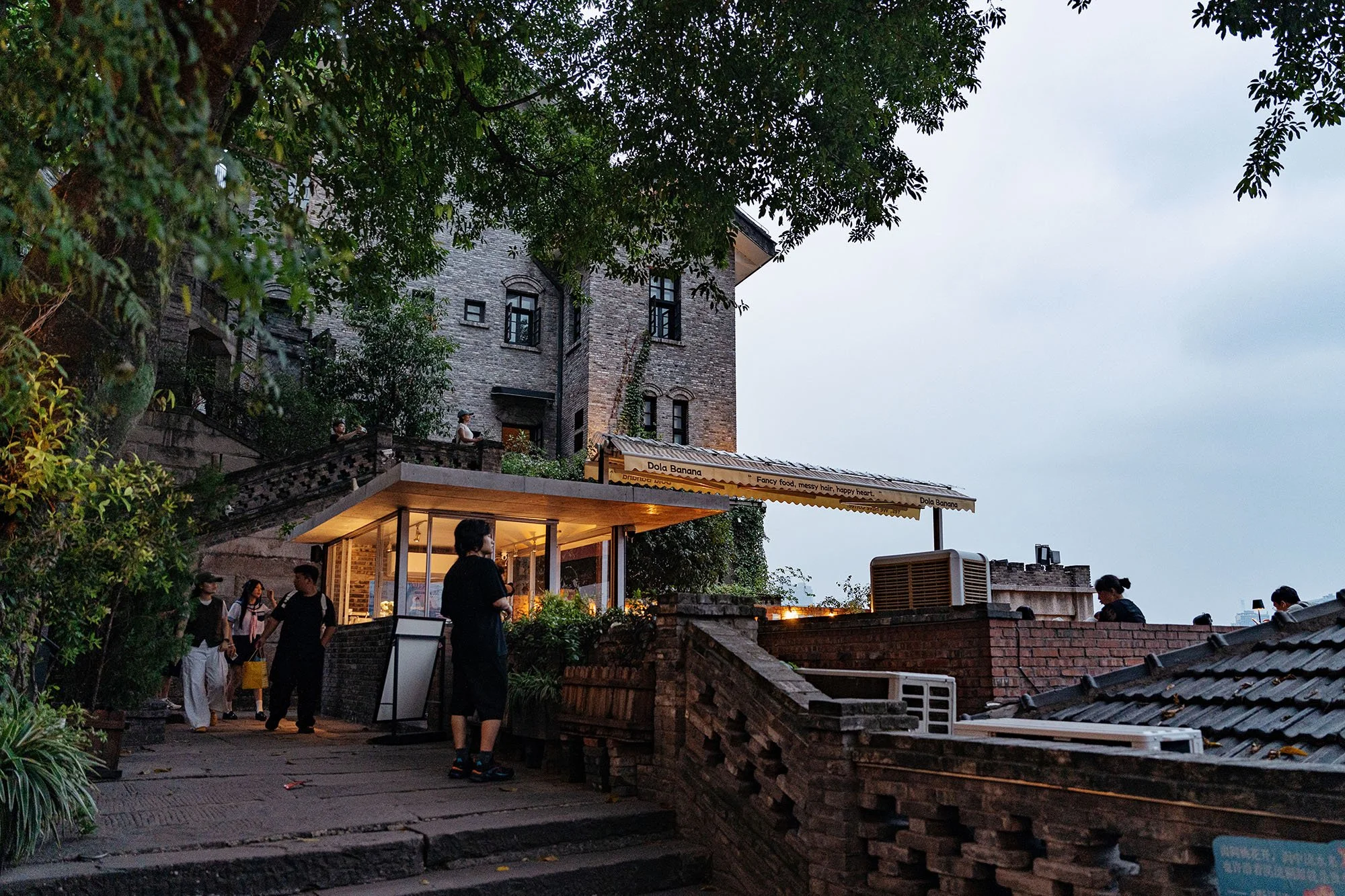
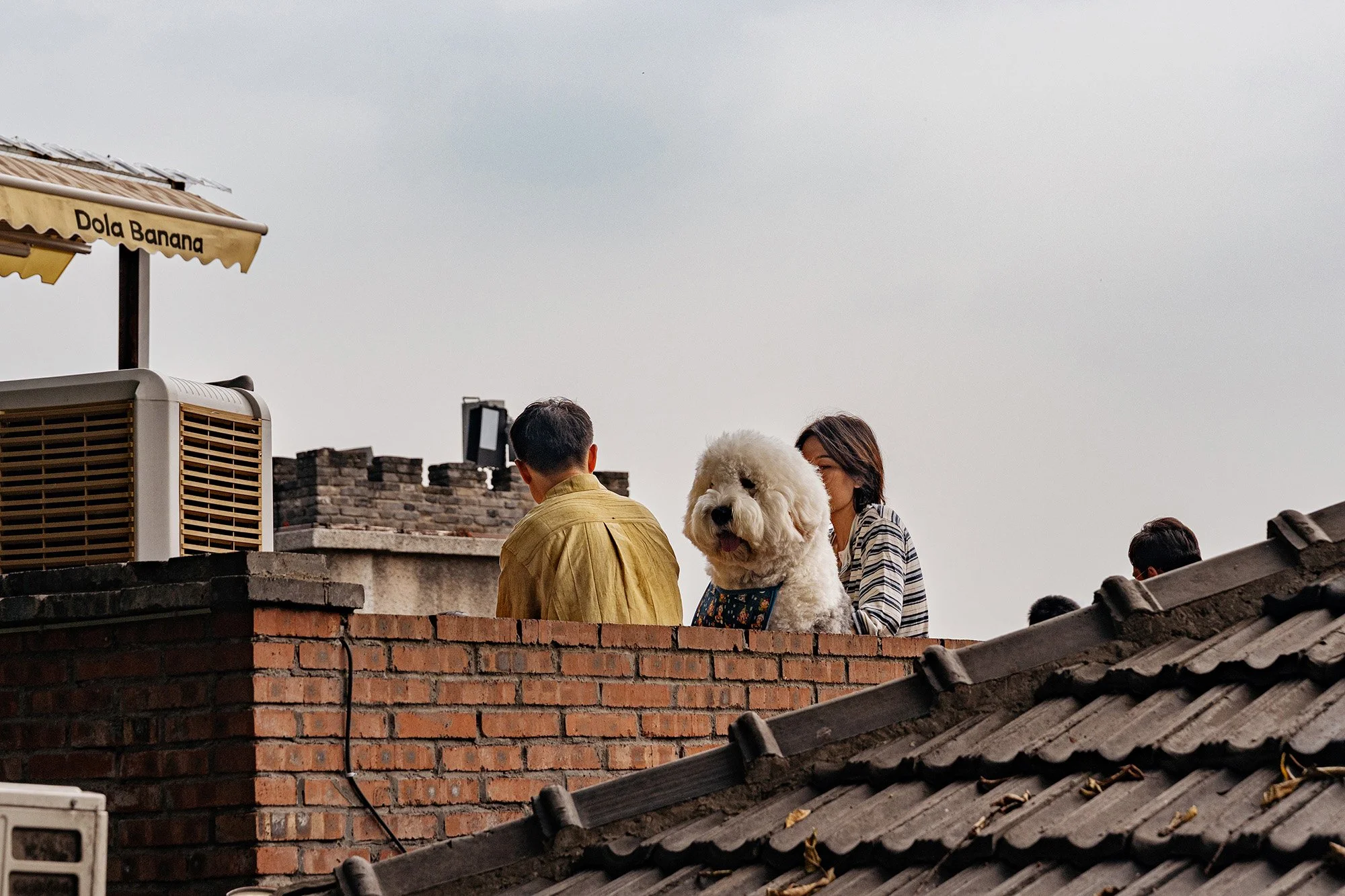
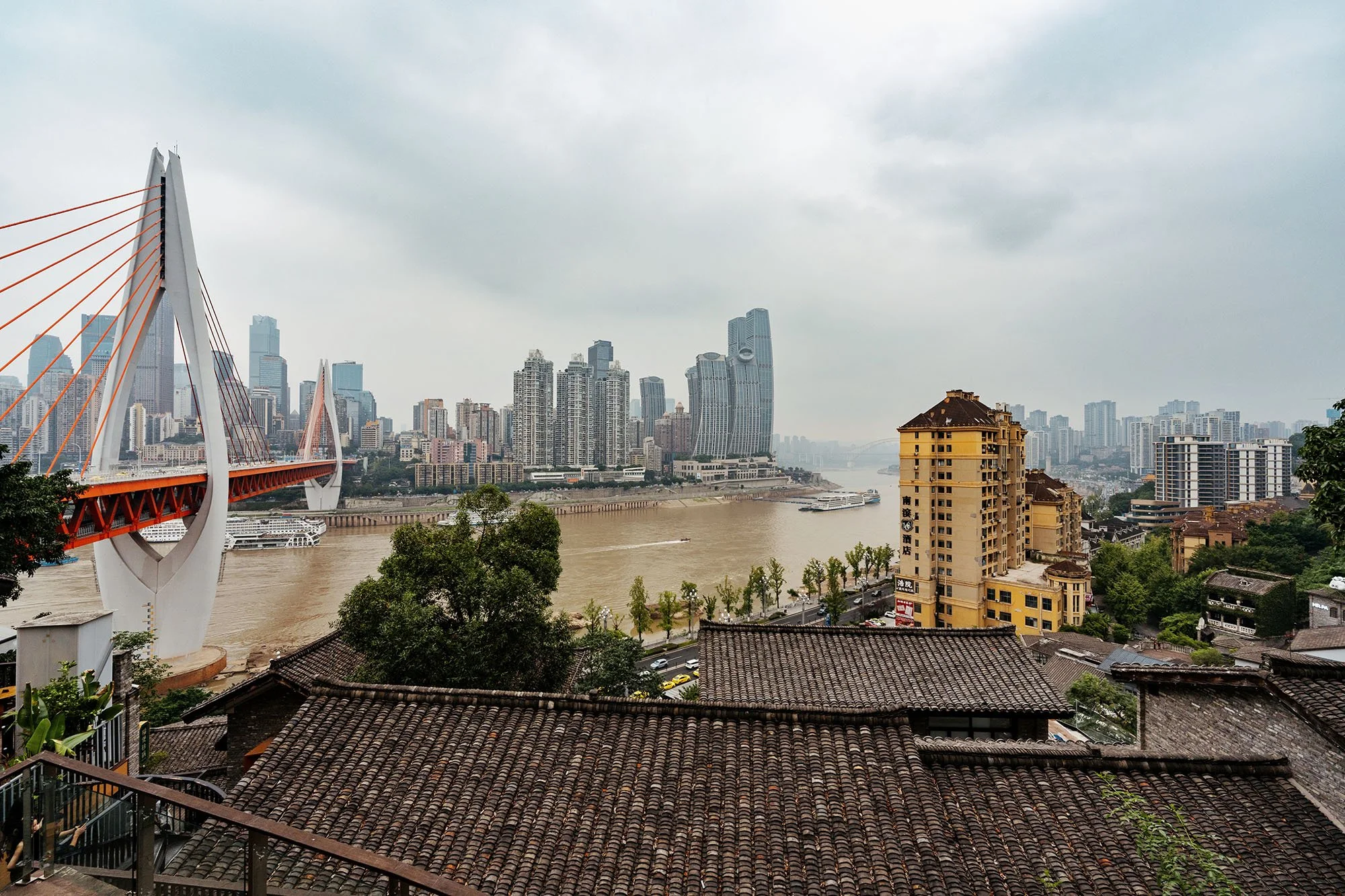
I first noticed Xiahaoli (下浩里) on the DiDi ride into the city from the airport as it had crowds of people near the entrance. Located on the south side across the Yuzhong Peninsula, the area features various shops, restaurants and cafes (such as the one I share below), built from the river level up the side of its mountainous terrain.
The road leading up to Dongshuimen Bridge (东水门长江大桥) separates Xiahaoli and Longmenhao Old Street (龙门浩老街), with the latter located on its western side.
These locations date back 1,000 years and were a port from where military supplies, agricultural items, and porcelain were shipped on the Yangtze River. The buildings here today were originally built in 1891 during a time when Chongqing became China’s first inland port open to foreign trade. Longmenhao became a district with foreign companies, banks and warehouses. Xiahaoli became a residential and commercial center where laborers, merchants and local citizens lived and worked.
Longmenhao was restored in 2018 and Xiahaoli in 2022 using historic bricks and tiles to the heights, styles and footprints of the local houses there in the 1970s - 1980s. They’ve become a popular destination both to explore and take photos in. There are a lot of stairs and tiny walkways, so it’s not for everyone, but it’s a neat area to check out.
Qiansimen Jialing River Bridge area
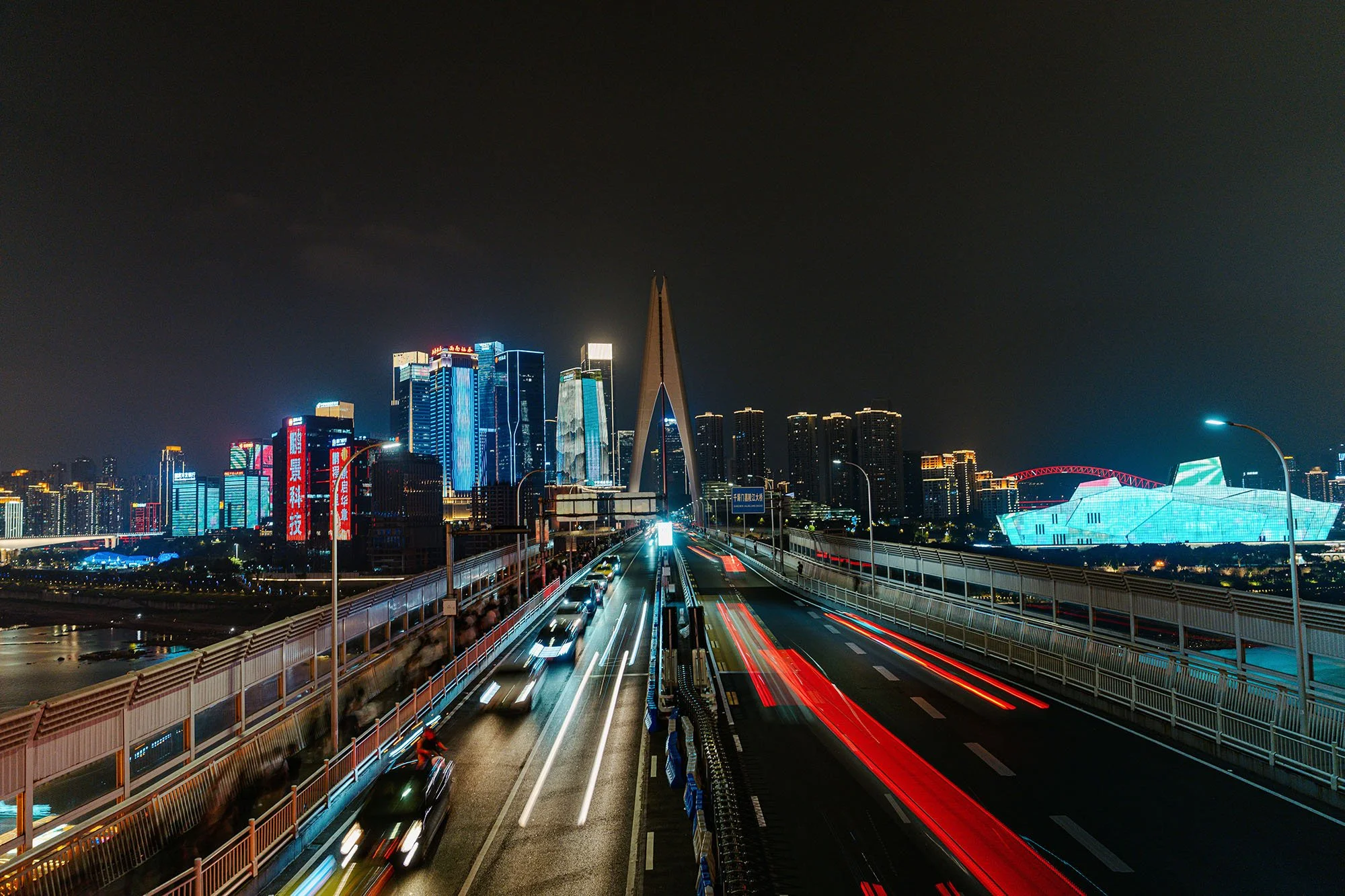
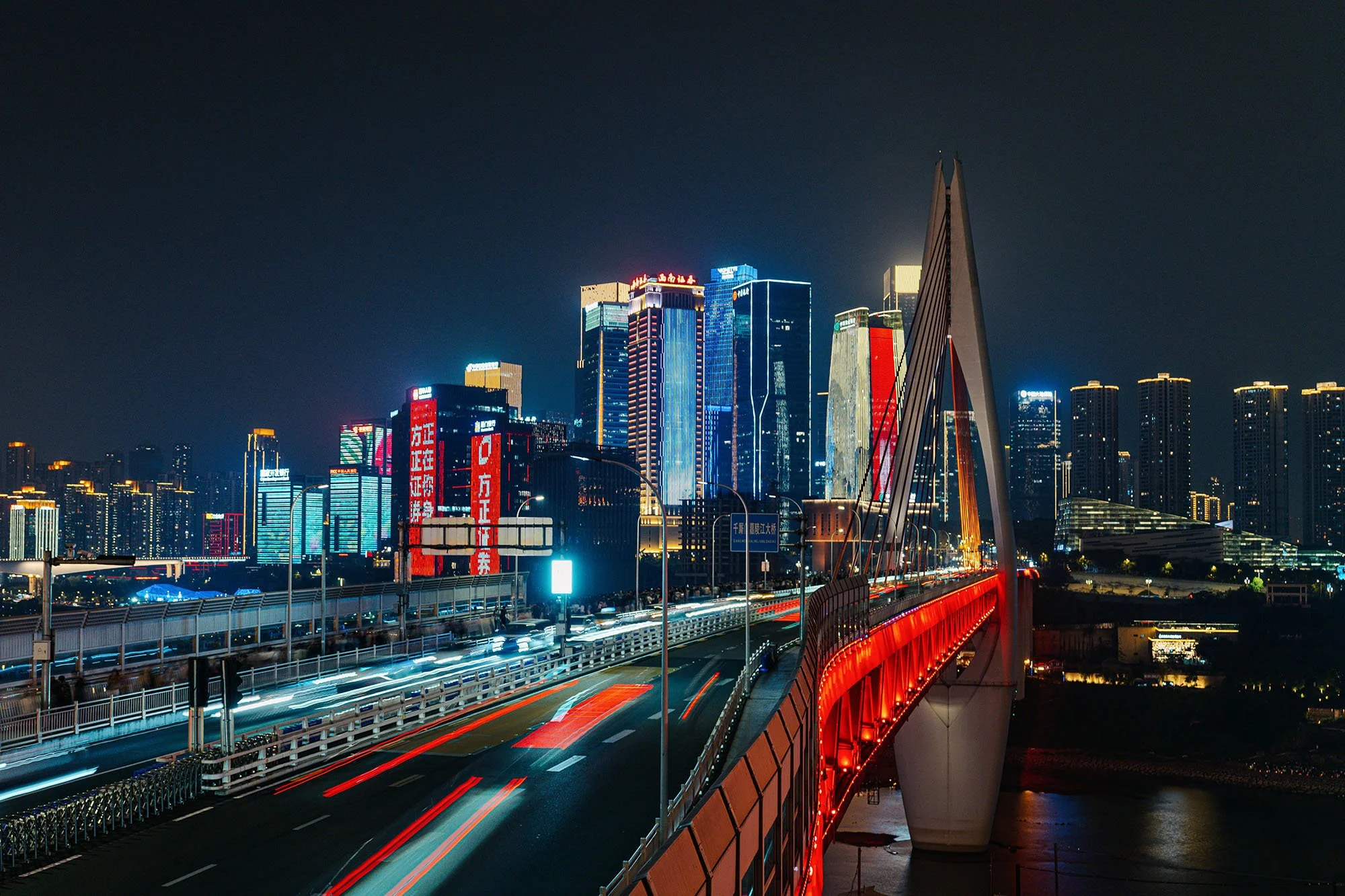
The Qiansimen Jialing River Bridge (千厮门嘉陵江大桥) connects the Yuzhong peninsula with Jiangbei, the north side of the city. The views seen in this area are largely responsible for giving Chongqing its “cyberpunk” nickname as the bridge and buildings on both side of the river feature futuristic illuminations.
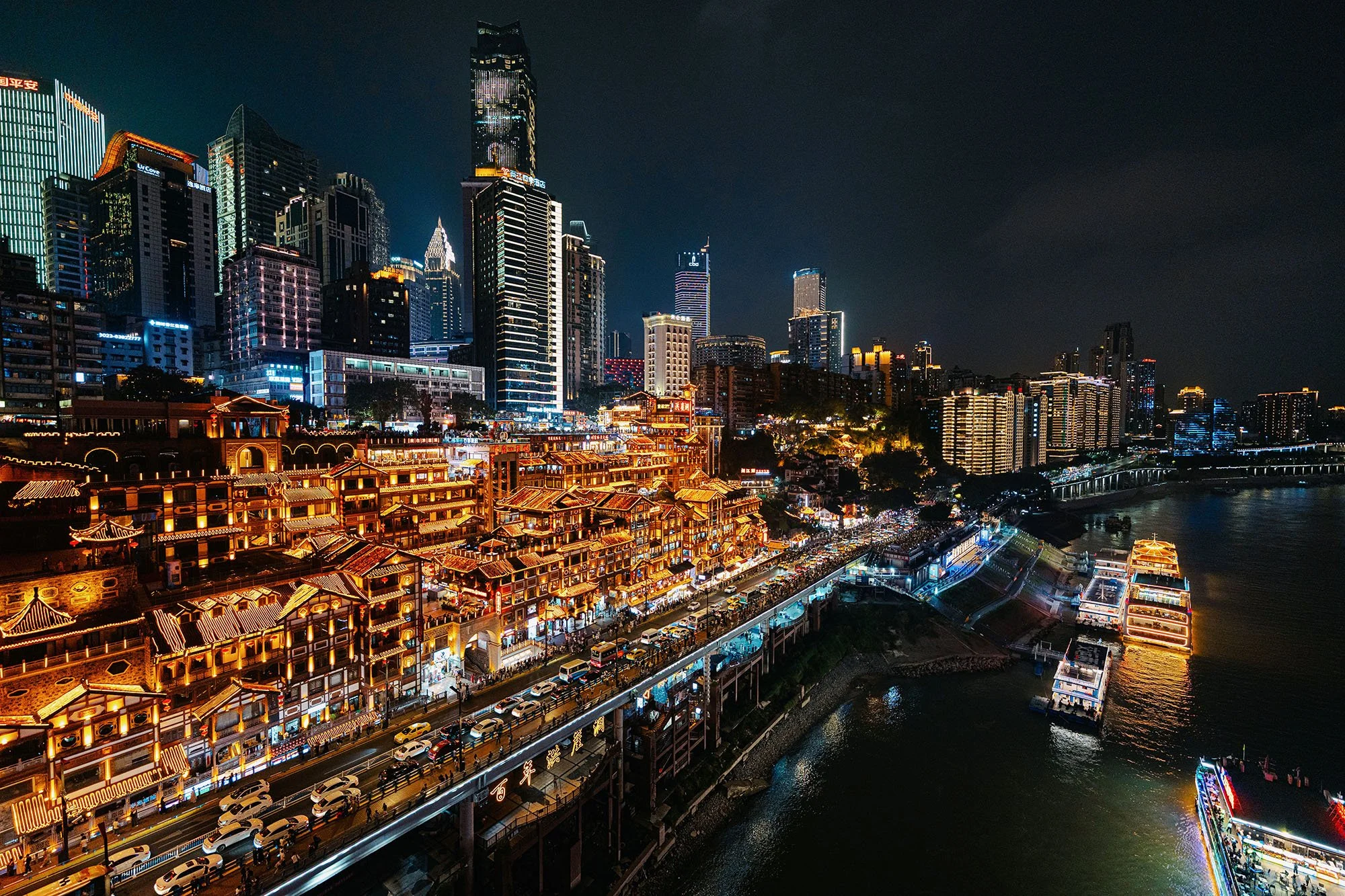
On the Yuzhong side of the bridge is also Hongya Cave (洪崖洞), the city’s iconic traditional-looking buildings that get lit up in a golden orange, as seen in the photo at the top. While the buildings were only constructed in 2006 and are mainly aimed at tourism, the site itself has a history that dates back some 2,300 years and are extremely beautiful to see at night.
This area is very crowded in the evening as its arguably the main sightseeing spot in the city at that time. There are stairs from the street above the bridge and you can go down them to the bridge’s pedestrian walkway, but it can be packed with people.
Keep in mind that Chongqing’s illuminations are not on all night. The sweet spot to target any night photography is between 8:00 PM and 9:30 PM. It’s worth a visit as the city’s night views can be compared to the iconic ones like Shanghai’s or Hong Kong’s.
Kuixing Building
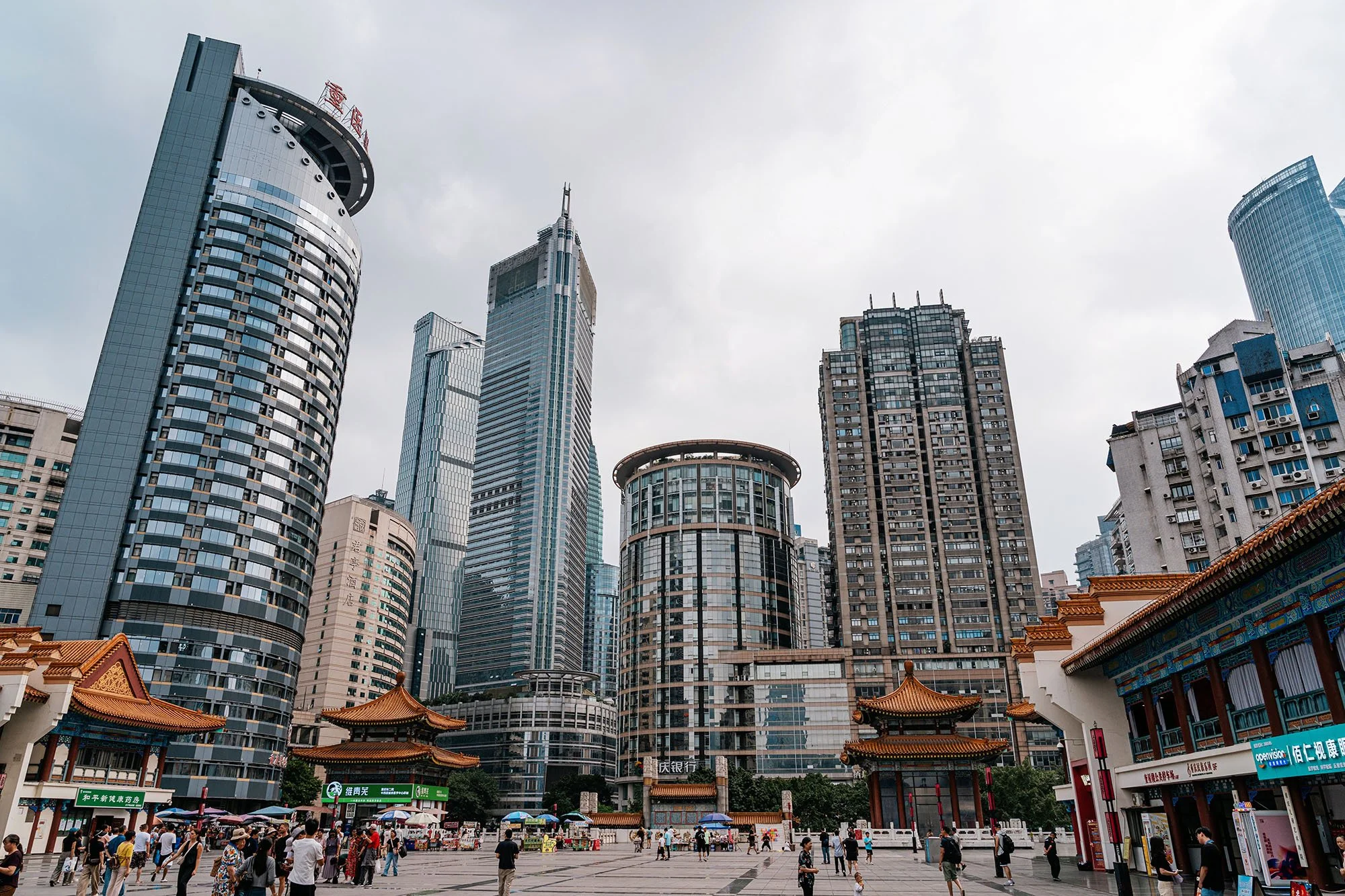
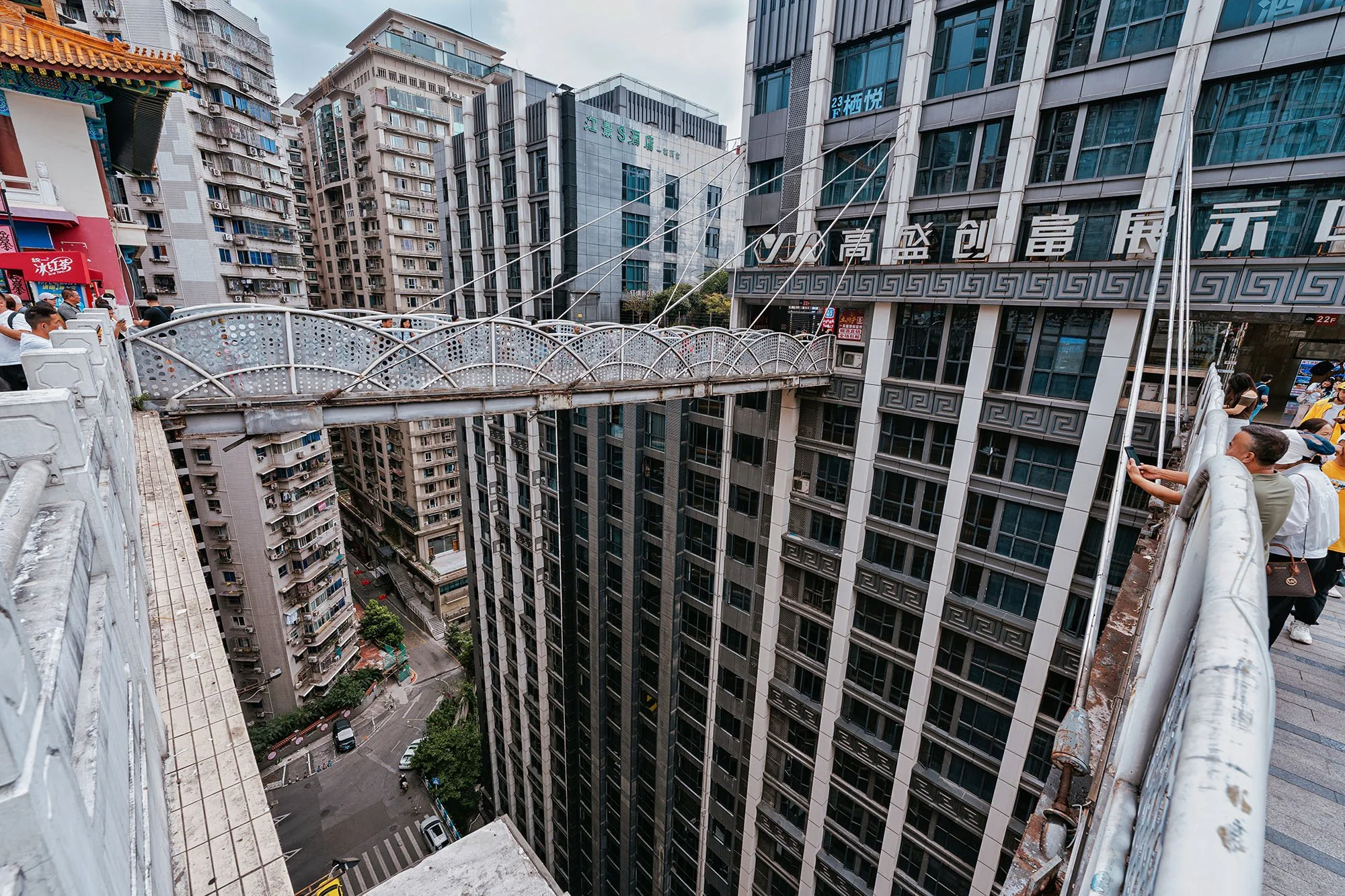
This is one of the iconic spots that showcase this “8D City” built on mountainsides. The Kuixing Building (魁星楼) is famous because it’s a plaza that’s about one floor up from street level on one side, but 22 floors above ground on the other.
I’ll be honest - I thought it’d be an overhyped tourist destination. I had just come from seeing the Line 2 monorail pass through the building at Liziba Station, another iconic Chongqing spot, which I thought that was nothing shocking. This, however, is quite interesting because it’s completely unexpected as you don’t see a cliffside, and because the change in elevation is so drastic.
Once you’re done, you can exit on the street side and head a block or two to the left where there’s a shopping area, the Chongqing Art Museum (重庆美术馆) and the People’s Liberation Monument (人民解放纪念碑) area.
People’s Liberation Monument & Jiefangbei Pedestrian Street area
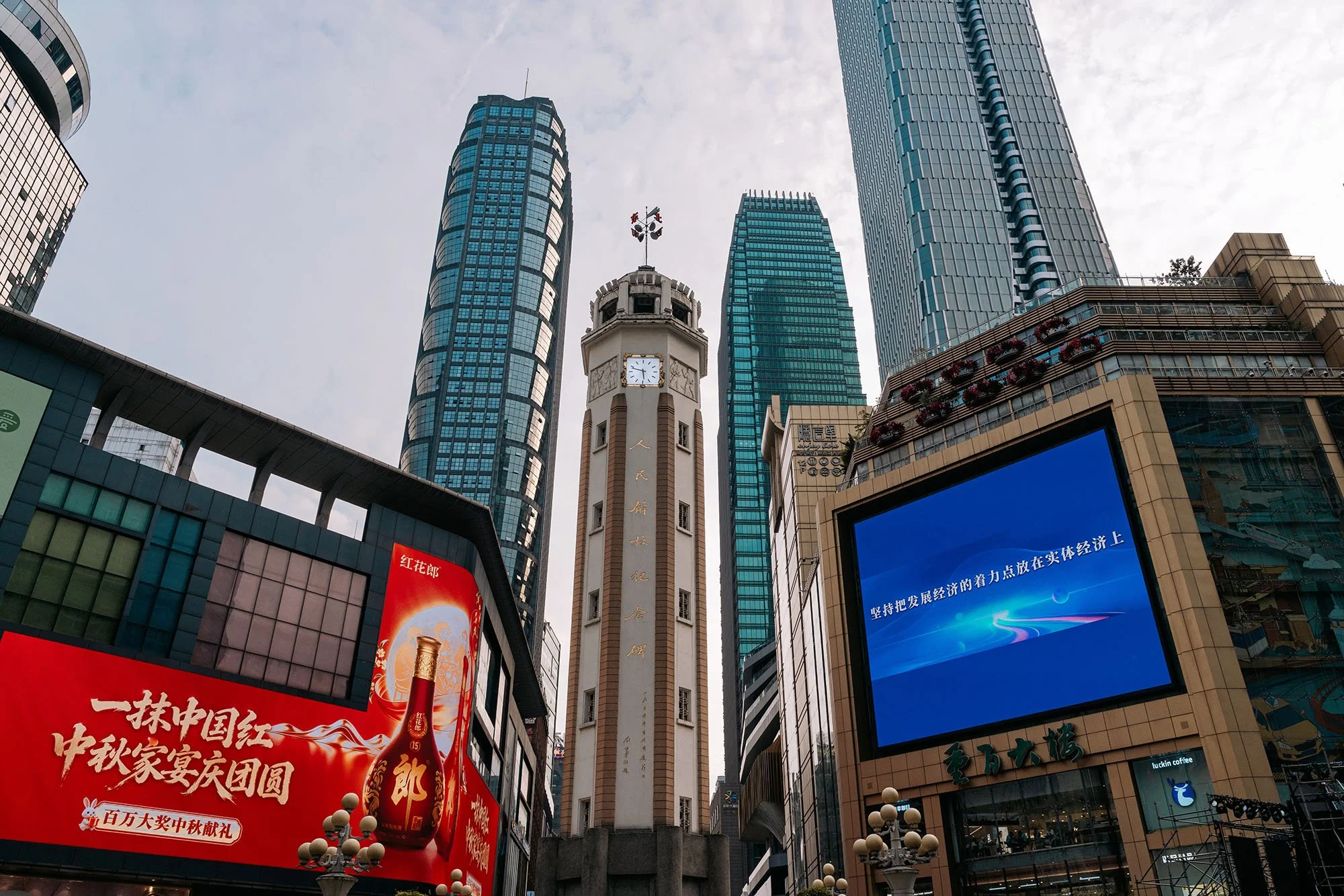
Located in the heart of a business district on the Yuzhong Peninsula, the Jiefangbei Pedestrian Street (解放碑步行街) area is bustling and one of the spots that visitors flock to.
The People’s Liberation Monument (人民解放纪念碑) is at the center and stands 90 ft. / 27.5 meters high. It was built in 1940 to boost morale as the city was faced years of bombing by Imperial Japan. Air raid tunnels still exist underground here, and now they house hot pot restaurants for anyone looking for an interesting atmosphere.
Believe it or not, until the 1980s, no building was built taller than the monument, which is a huge contrast from present-day Chongqing.
Pedestrian streets extend outwards from the monument featuring shopping malls, eateries, a park and third spaces, and Bayi Haochi Street is also in the area.
The Ring
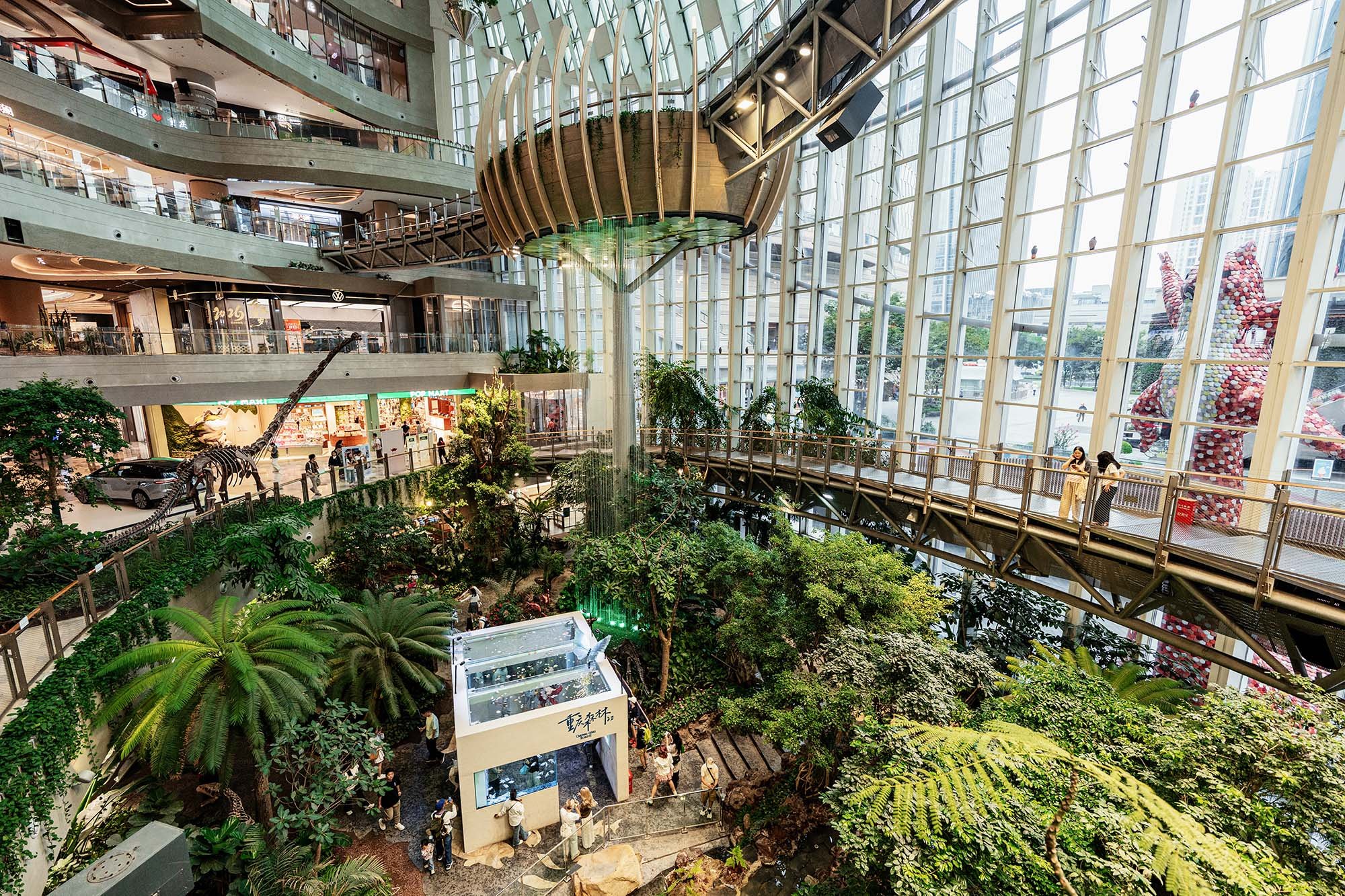
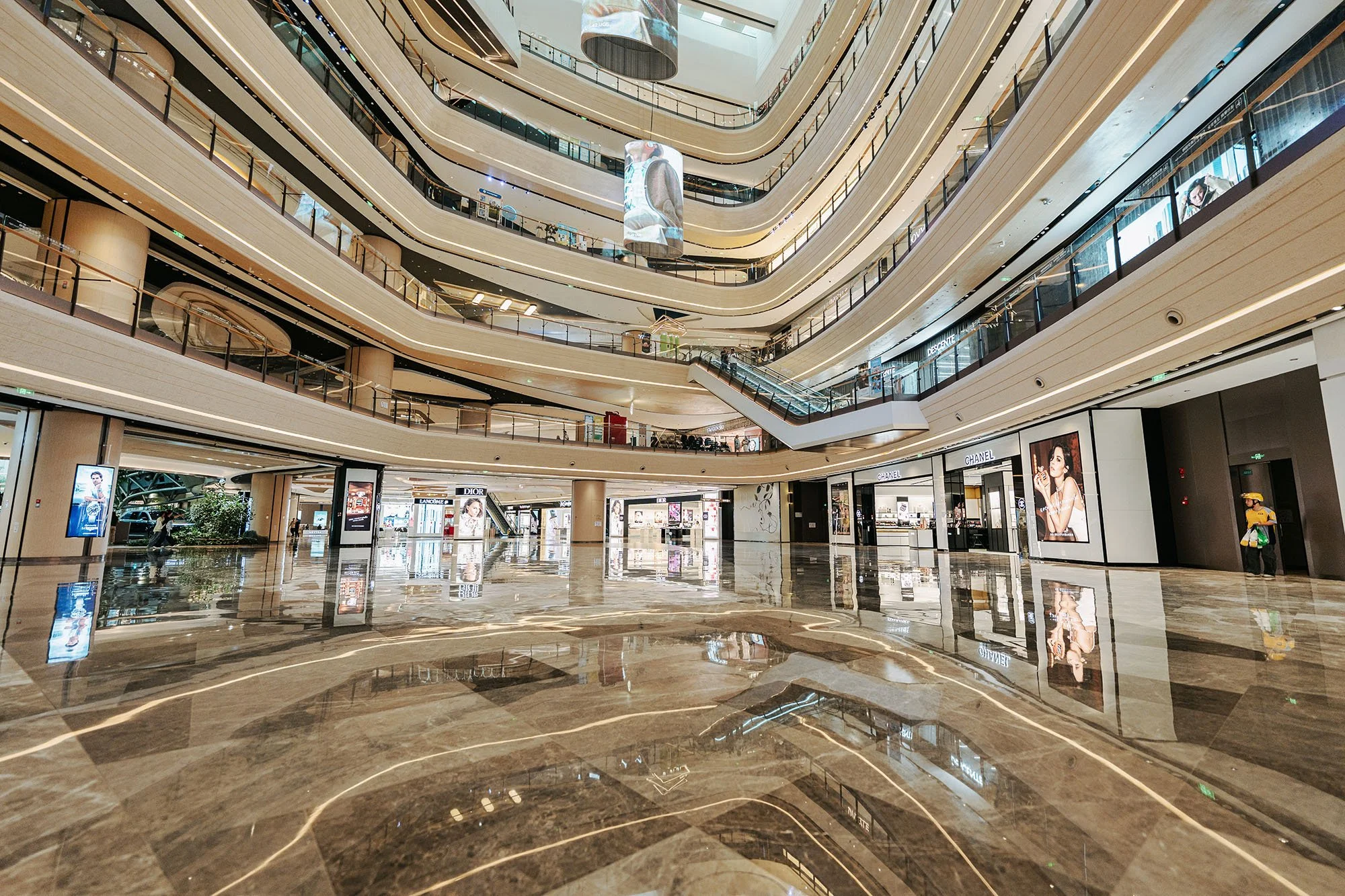
Located a little north of the main peninsula area is The Ring, a shopping mall that was completed in 2021 and centered around an 64,583 sq ft. / 6,000 sq. meter ecological garden. The mall aims to be a next-generation social destination.
There are walkways that pass over the garden but you need to stand in line or reserve an entrance time to go in the garden itself. An elegant waterfall is located under a walkway 3 floors above, and there’s a small aquarium as well as sitting areas.
The mall itself is large and beautifully designed. It features several floors of both Chinese and international retailers, restaurants and entertainment options on the top 2 floors, and a supermarket and more food, drink and snack options on the bottom floor, the same floor as the garden.
To get a feel for the city and the places I’ve visited, definitely check out my Chongqing video on YouTube.
Where to eat
Peijie Hot Pot (Hongyadong Branch)
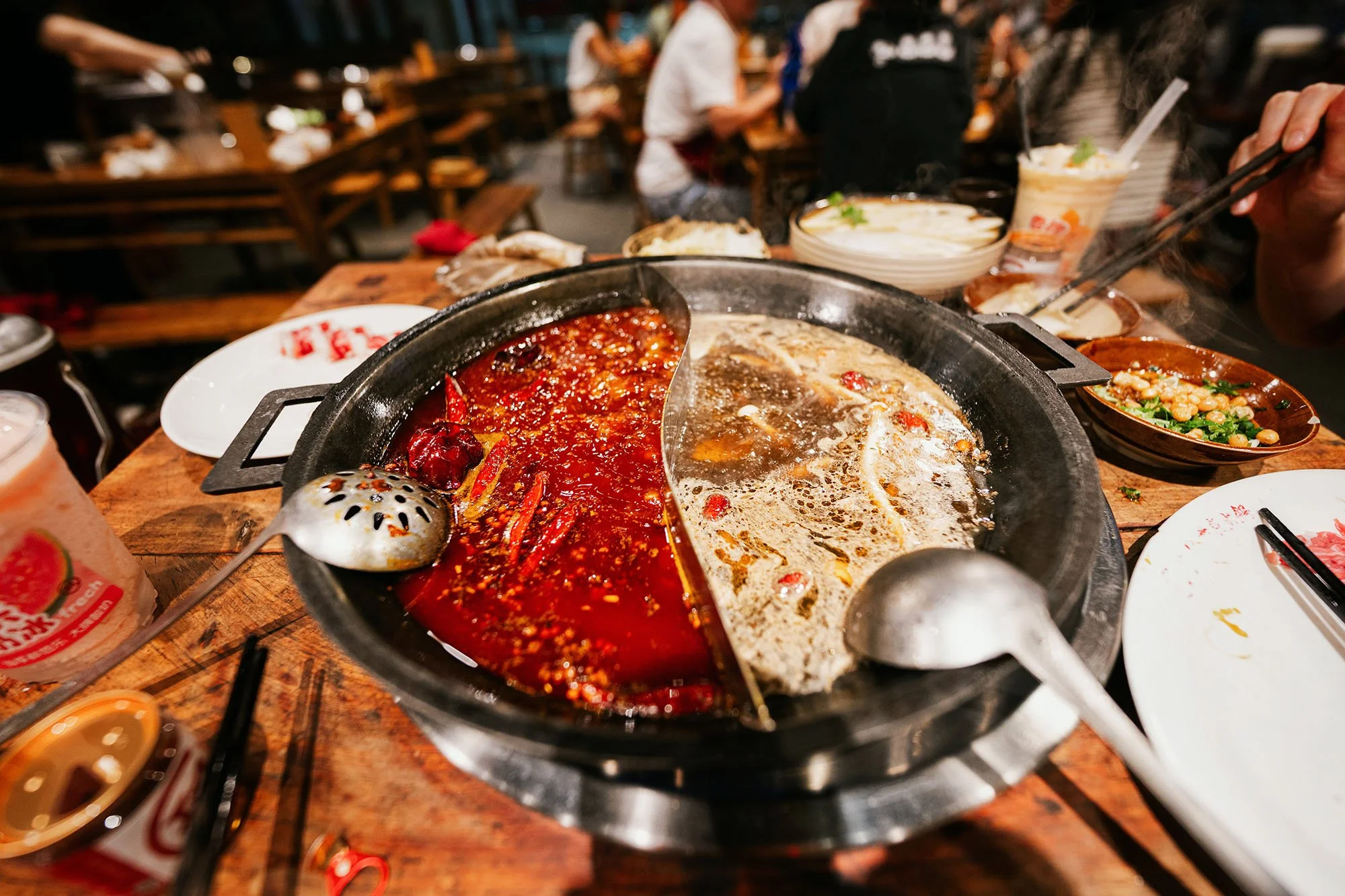
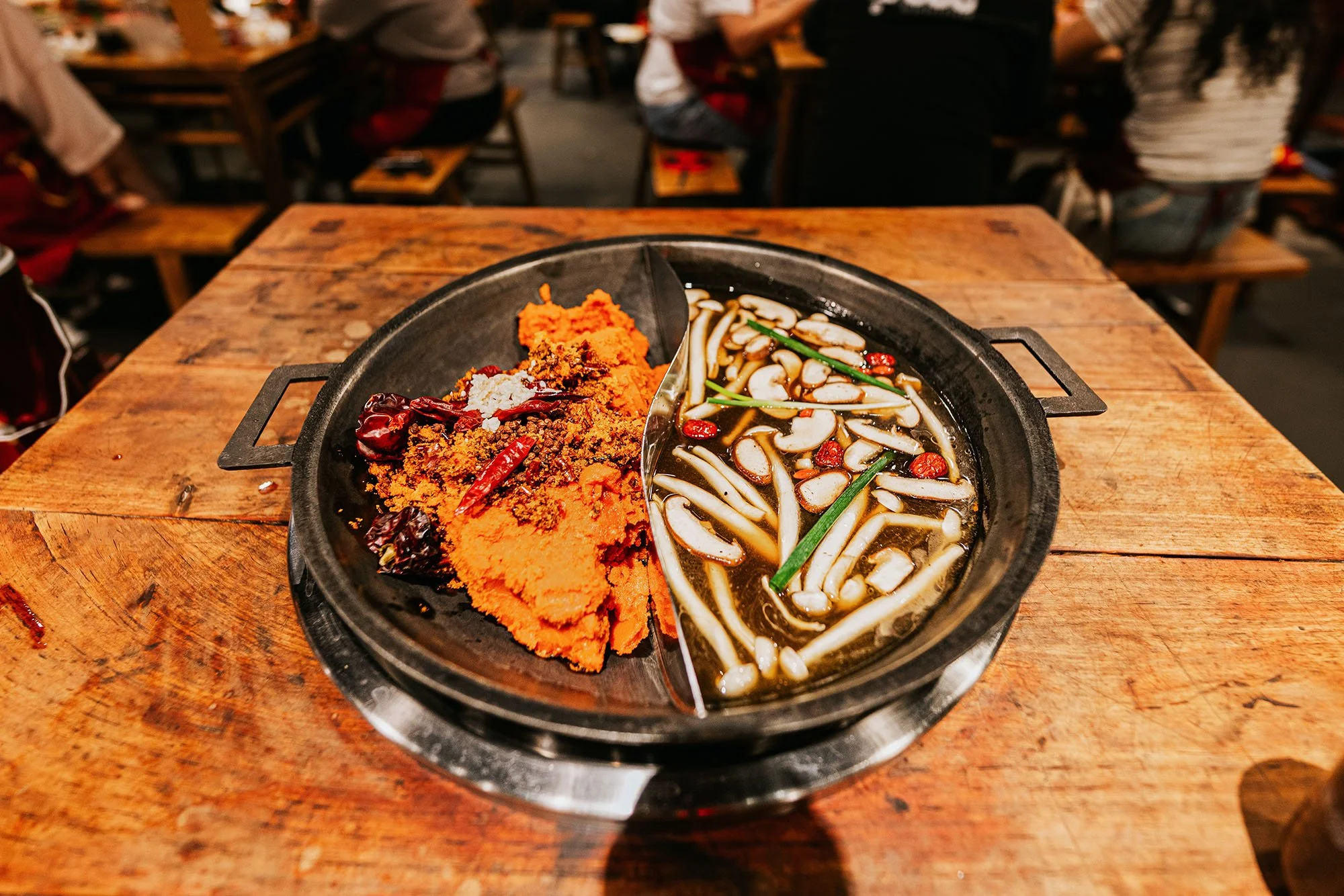
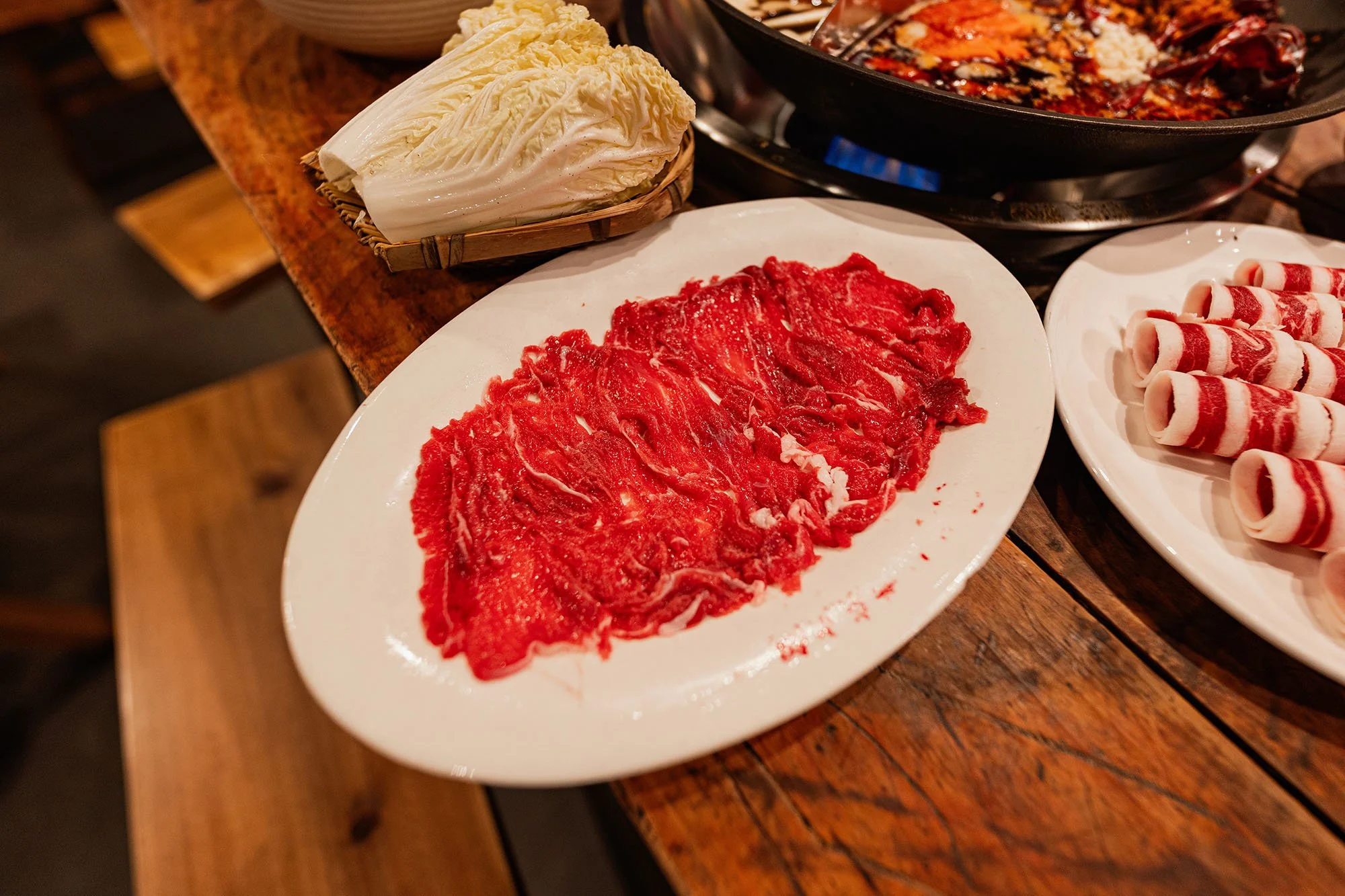
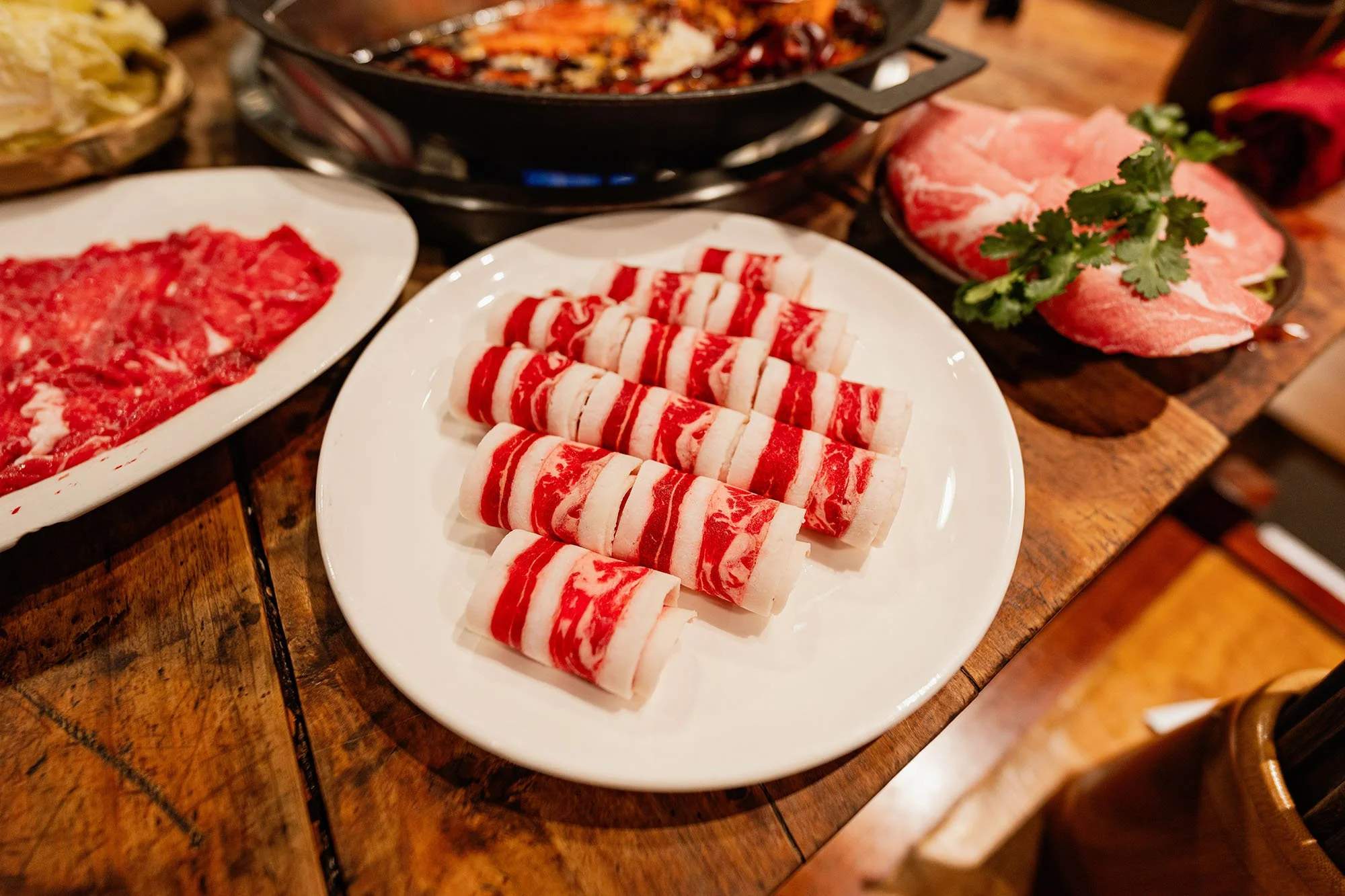
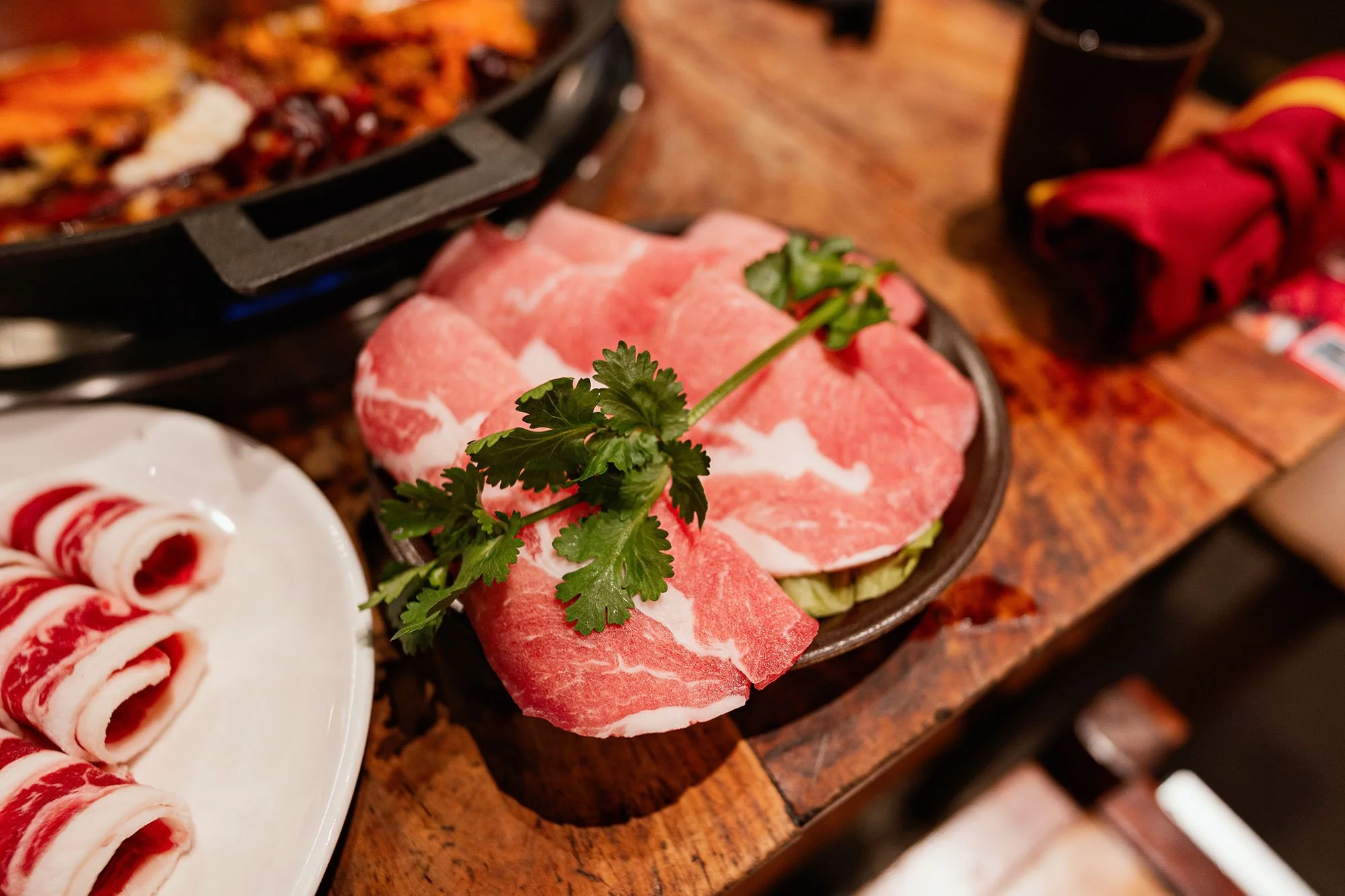
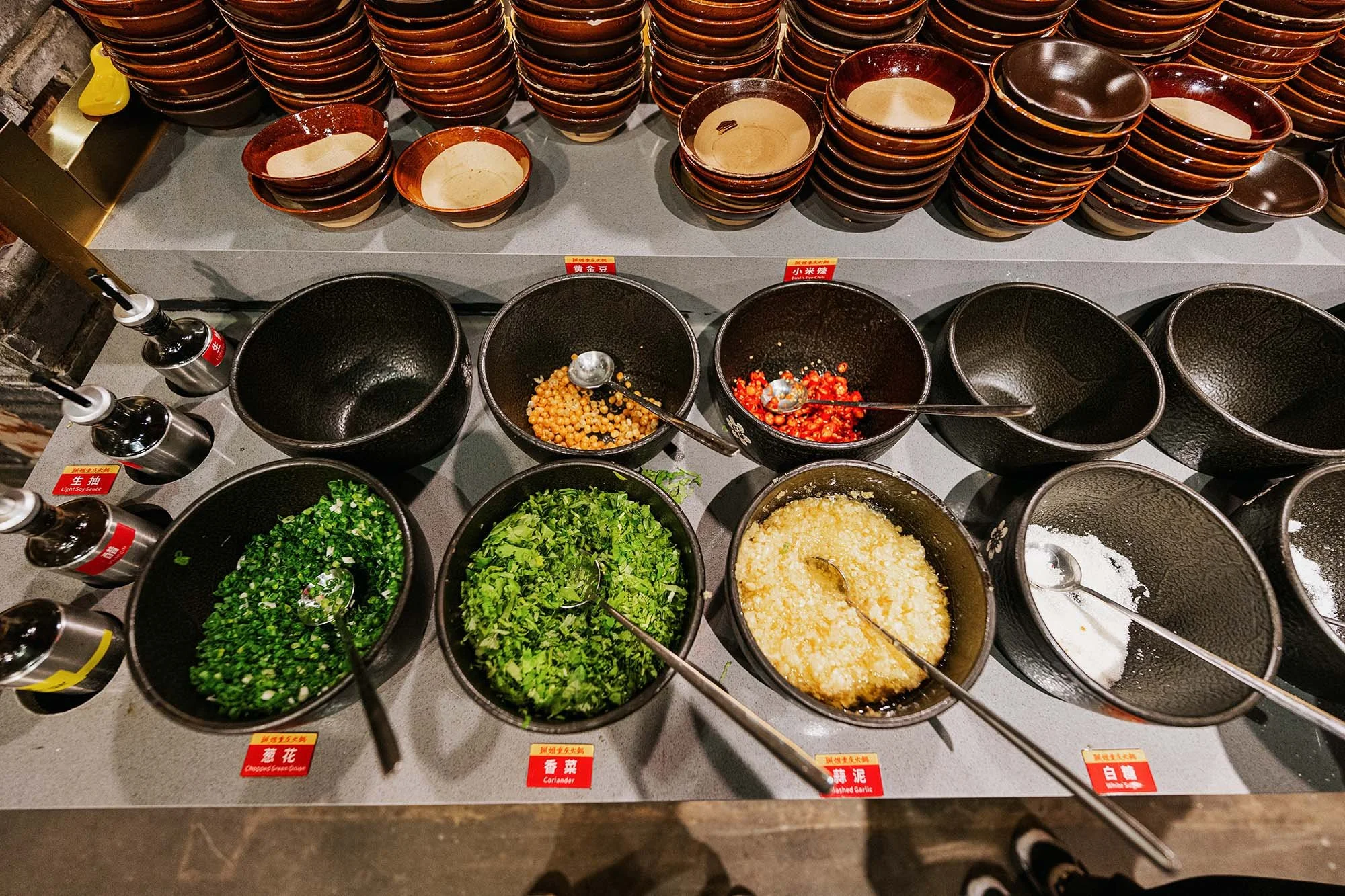
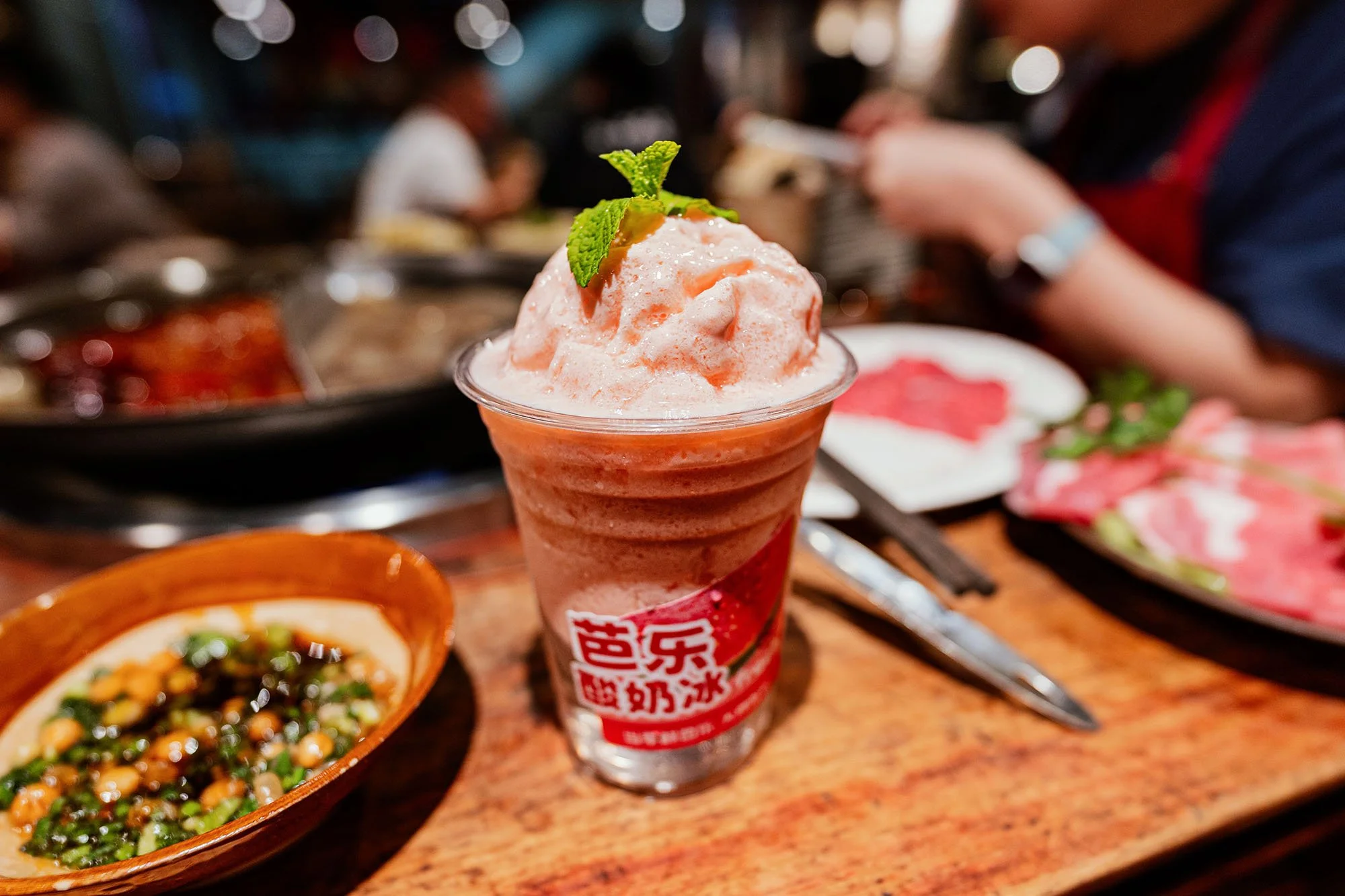
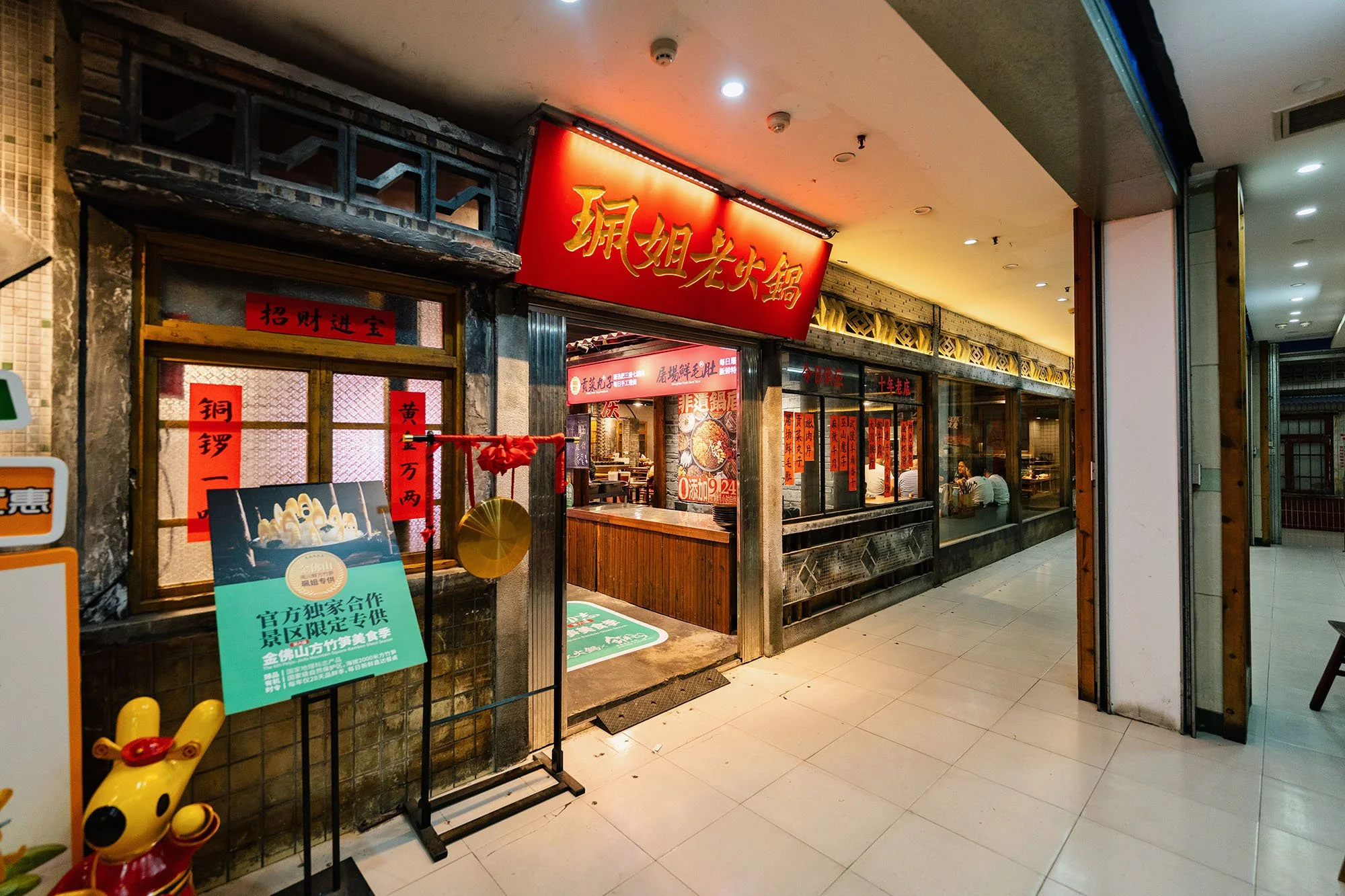
This highly-rated Chongqing hot pot restaurant lived up to its reviews and is a great choice for those who want an authentic experience.
As soon as I walked into Peijie (珮姐老火锅) on the second floor, I could feel the sting in my nostrils and chest. Potent. Our broths were a low-level spicy broth (yes, that’s the lowest level) that is deep in flavor due to the spices and beef lard, and a mushroom broth which was both addicting and a big help to balance the intensity.
Everything is ordered a la carte, and you make your own sauce with items from the bar and the oil that they give you.
While it was indeed spicy, the flavor was amazing and one of the best hot pots I’ve ever had.
Zhoupangmei Chongqing Noodles
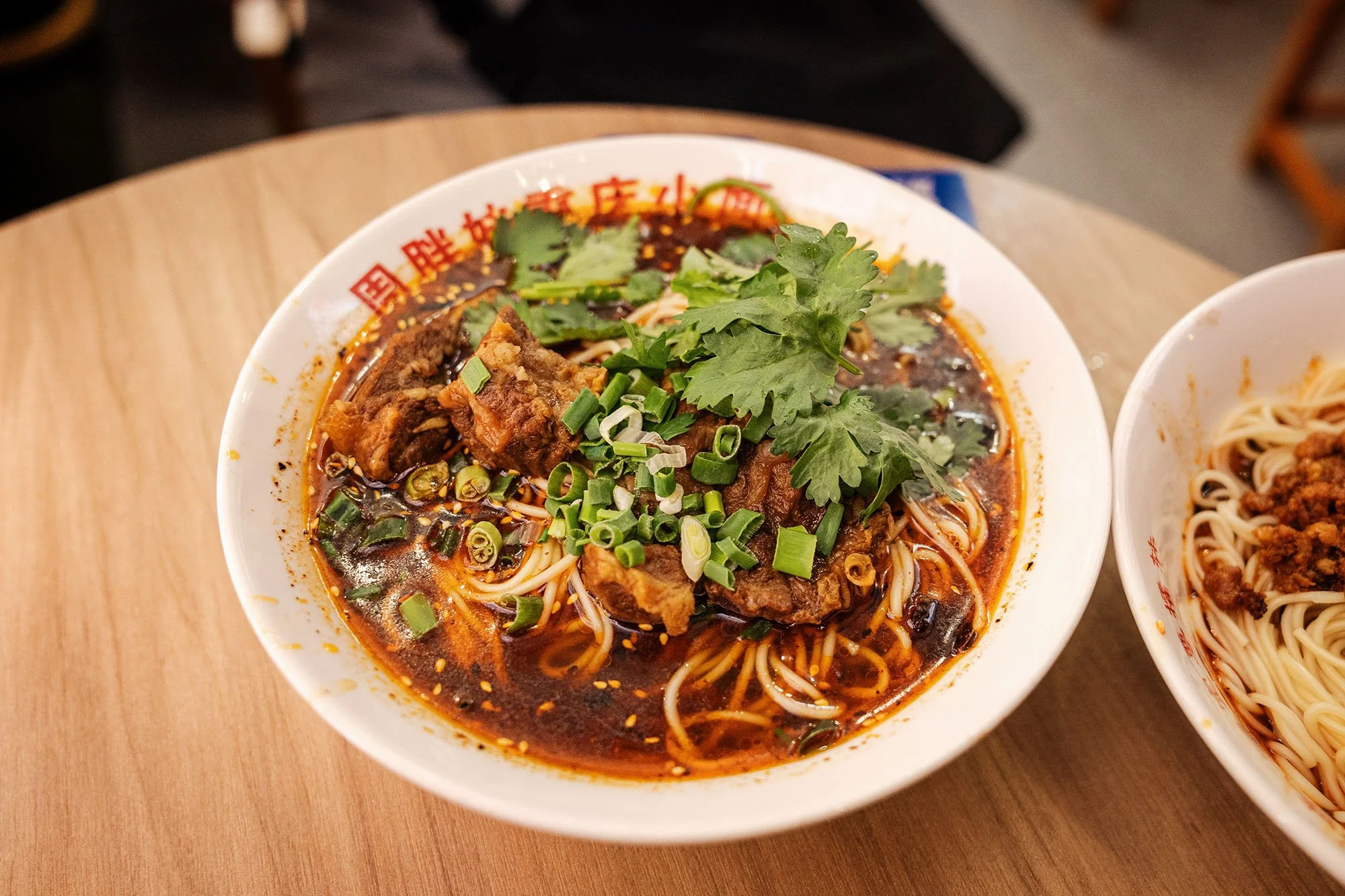
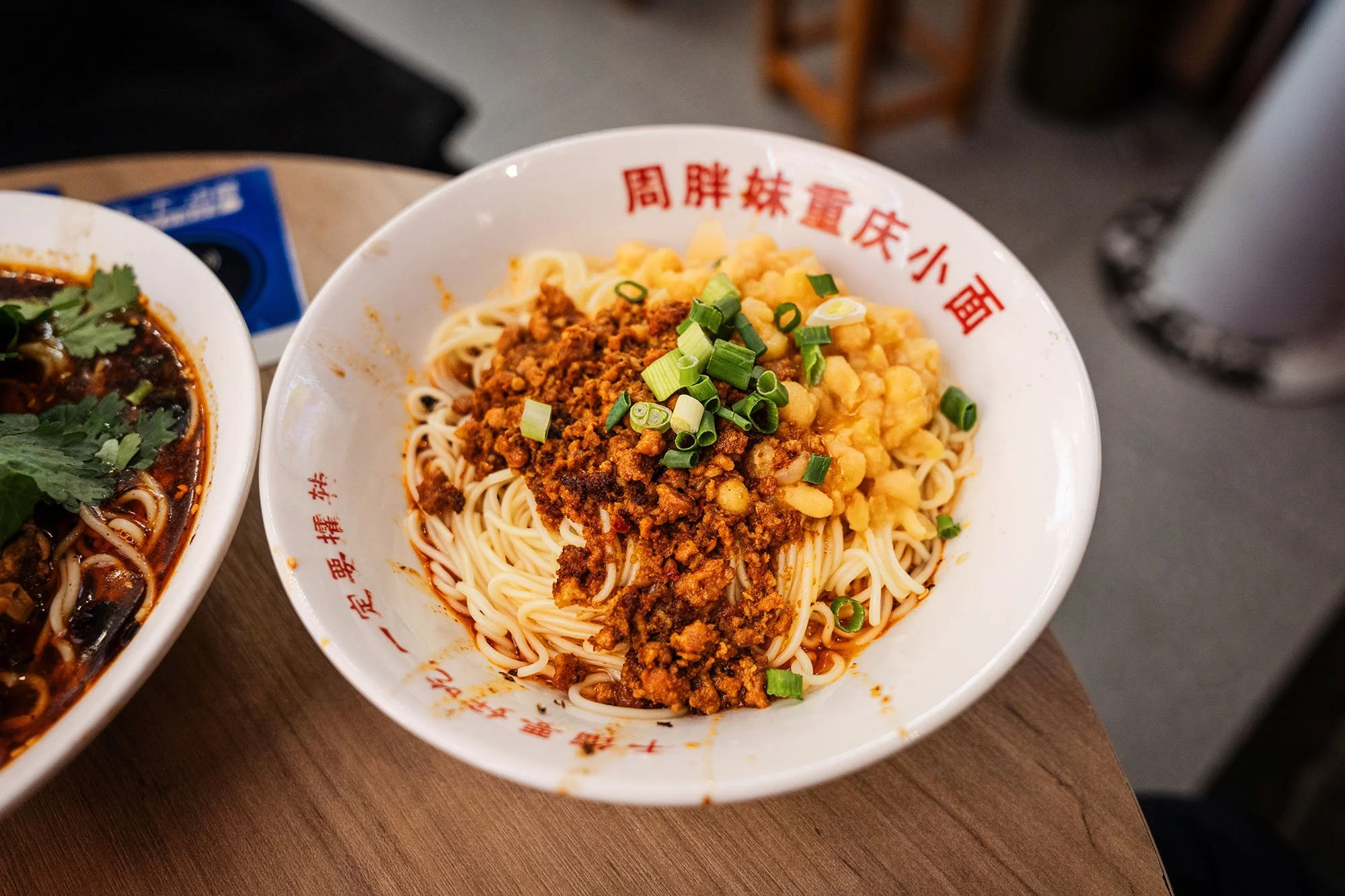
Near Raffles City at a 3-way intersection is a small shop with counter seating run by a woman serving bowls of local style noodles.
Zhoupangmei (周胖妹重庆小面) is highly rated on Chinese review app Dianping, and for good reason. Delicious and full of depth, each bite will please the taste buds. The soup one had a pleasant sourness with a slight smokiness to it, and the soupless one leaned more on Sichuan peppers and had a nice kick. These bowls were the small size and they filled us up.
The woman also seemed very trusting as she served us before we paid, even though we didn’t put in an official order though the app. She served us nicely and it felt like an excellent, local meal.
Chunzai Gallery & Coffee
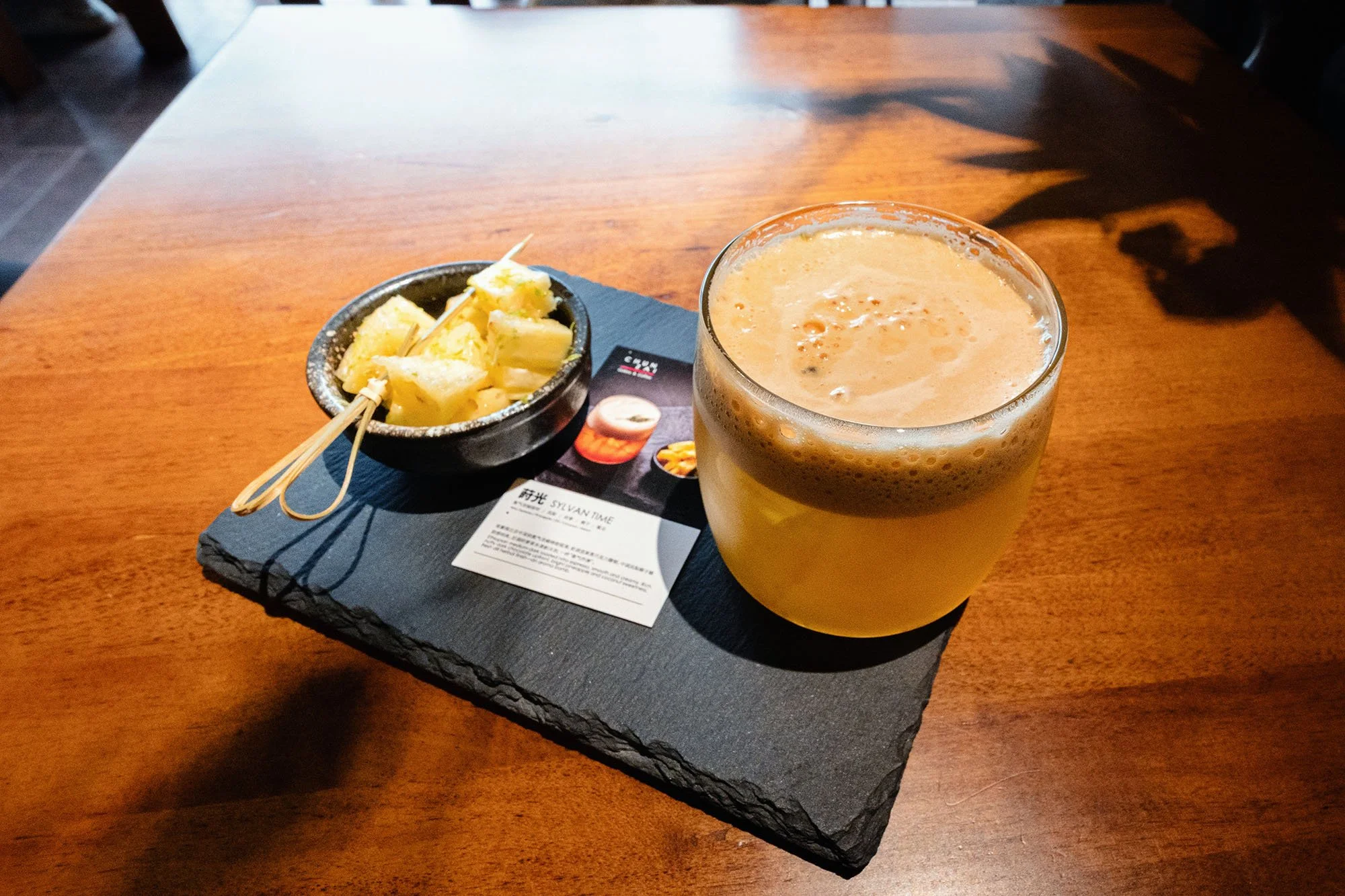
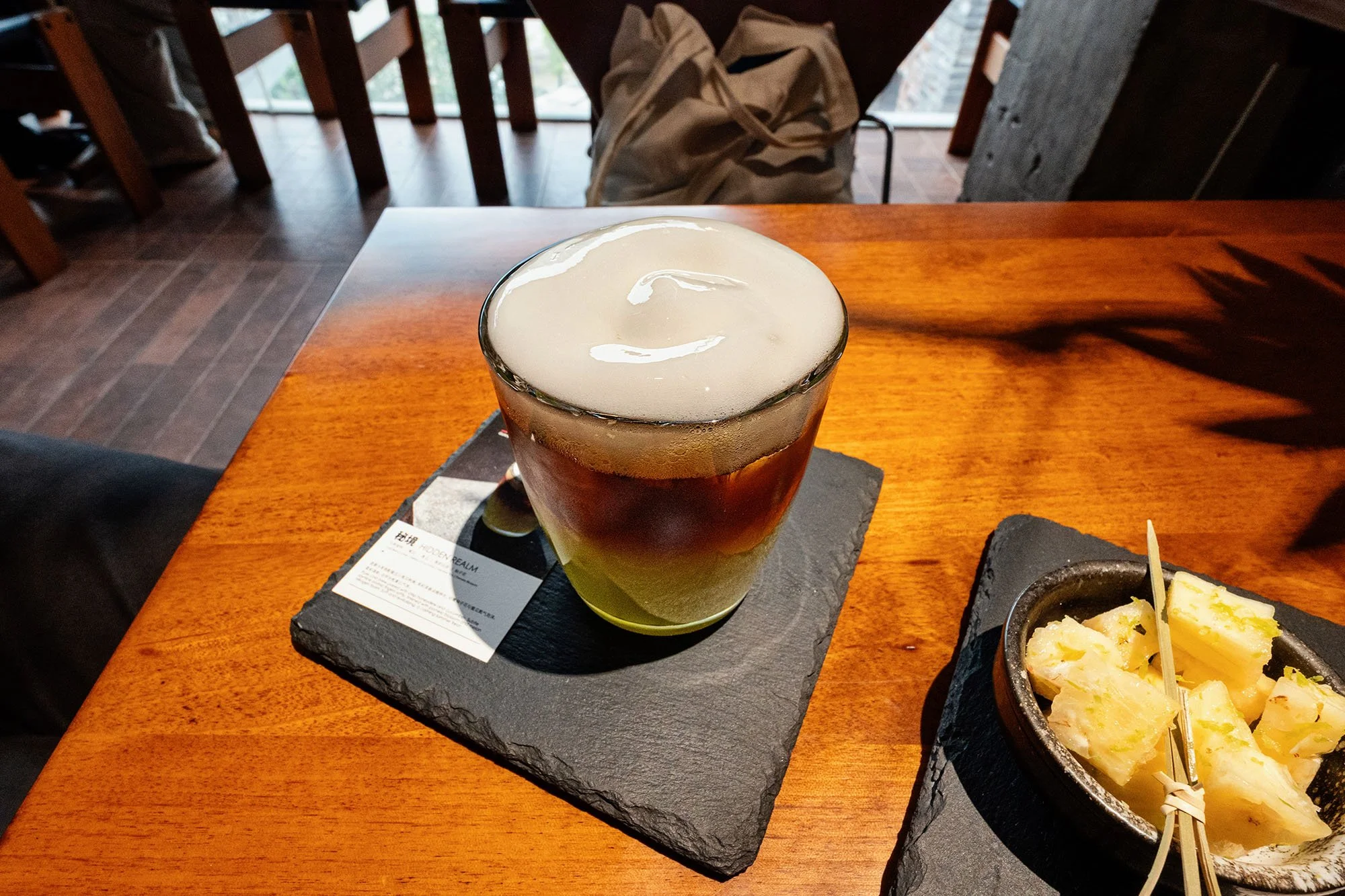
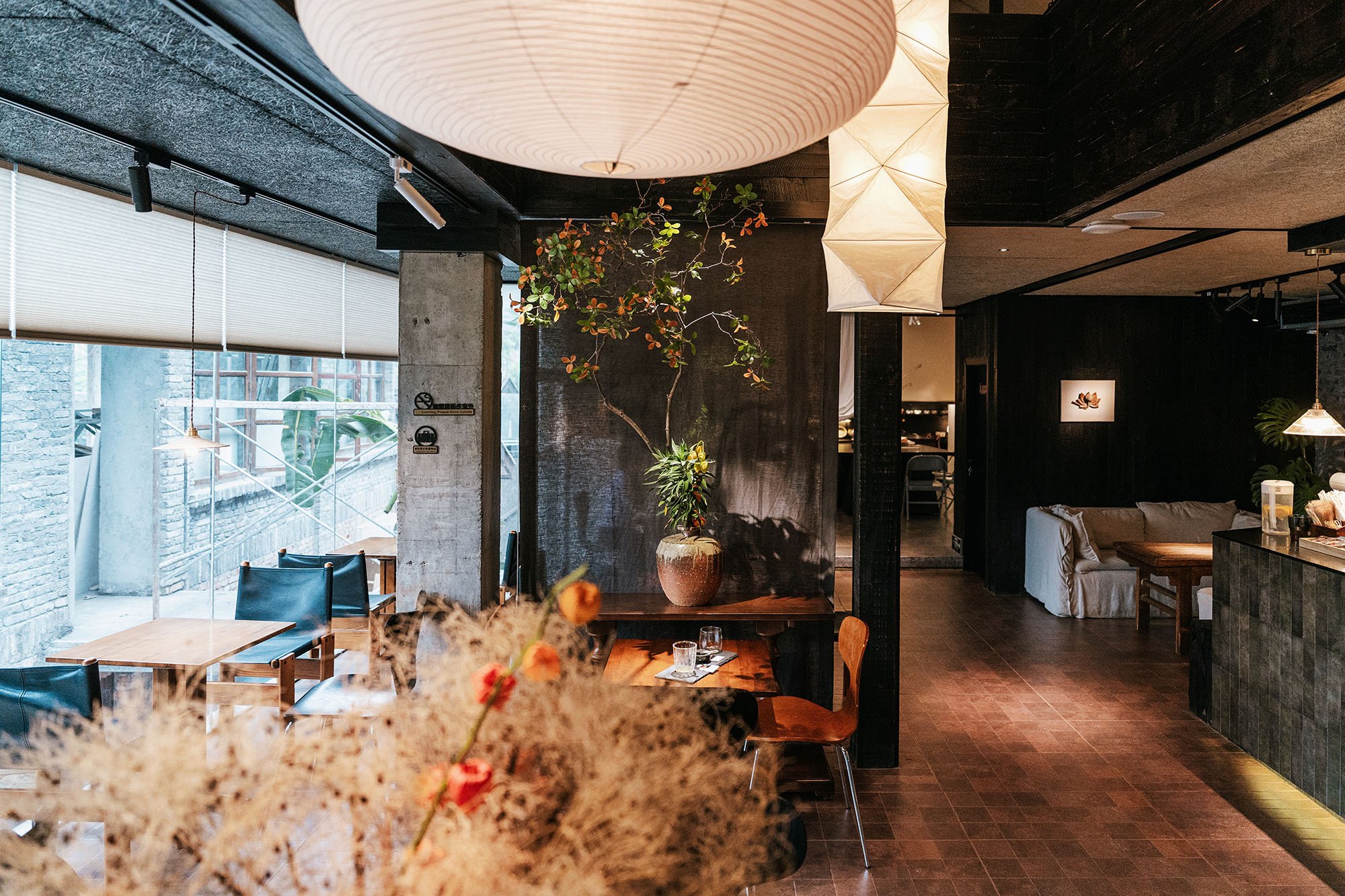
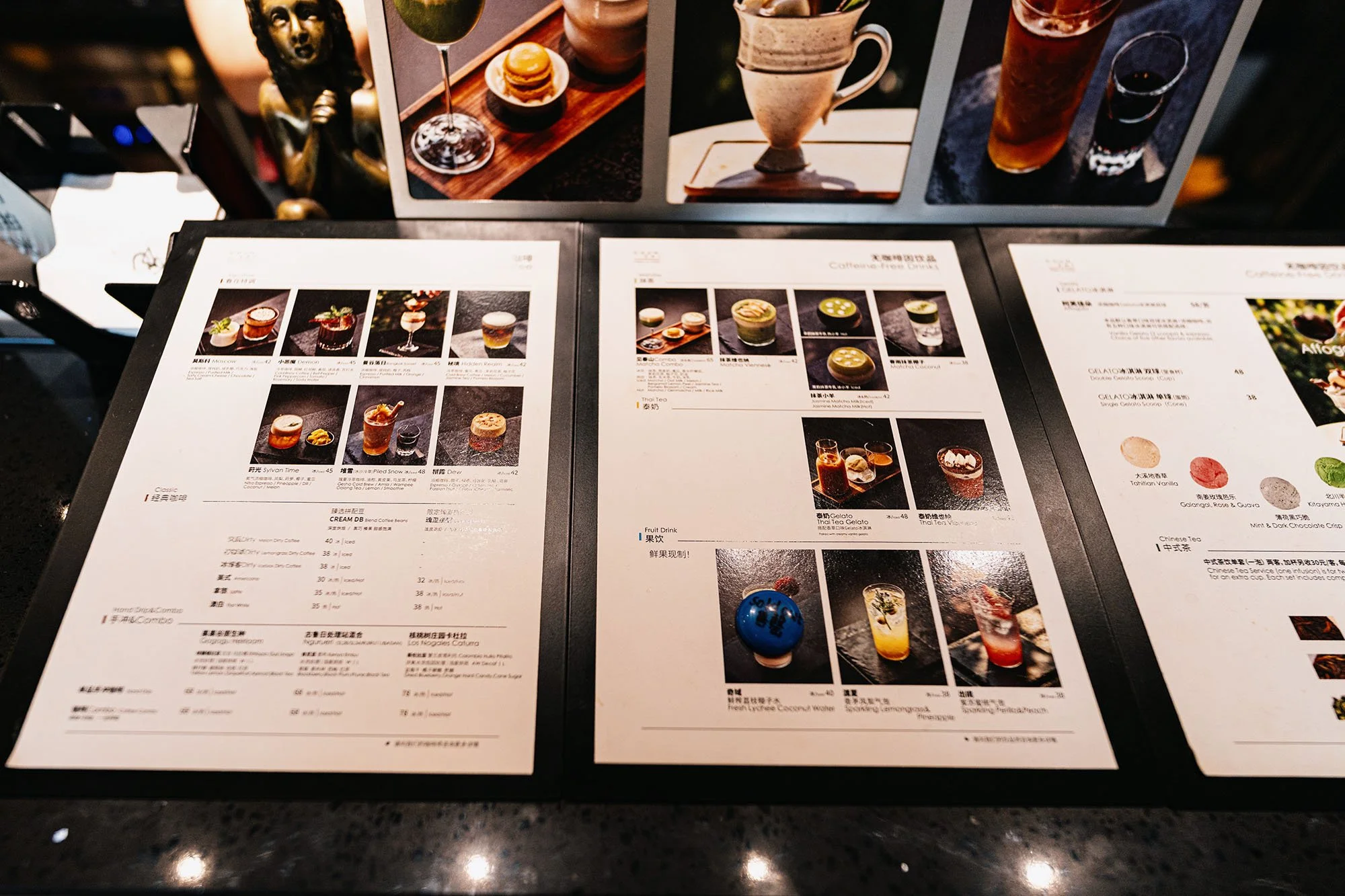
A few levels down from the top entrance of Xiahaoli is Chunzai Gallery & Coffee, a cafe that mixes creative drinks, good music and art.
Their drinks feature coffee and tea but incorporate ingredients commonly consumed and liked in the region. We got a Sylvan Time (Nitro espresso, pineapple, dill, coconut, melon) and a Hidden Realm (Cold brew coffee, melon, cucumber, jasmine tea, pomelo blossom). They both bordered on the light side and were refreshing.
Unlike most eateries, you order off the menu at the register and then pay there with whichever QR code payment you prefer.
In the back is a small art gallery that you can browse, and together with music that leaned towards hip hop when we were there, it was a good moment to relax.
Laidekuai Hot Spicy & Sour Vermicelli (Yu Zhongda Ronghui Shop)
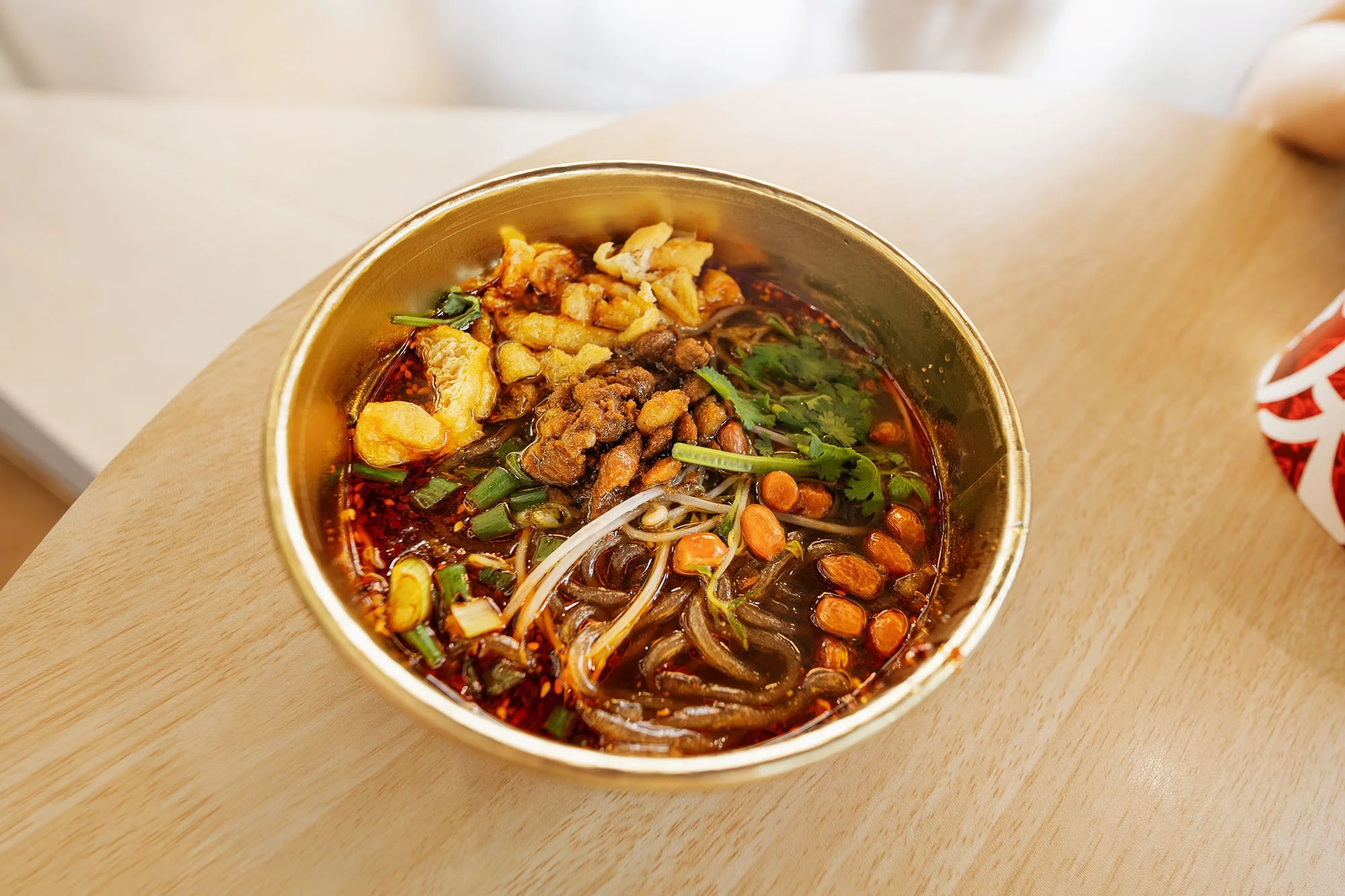
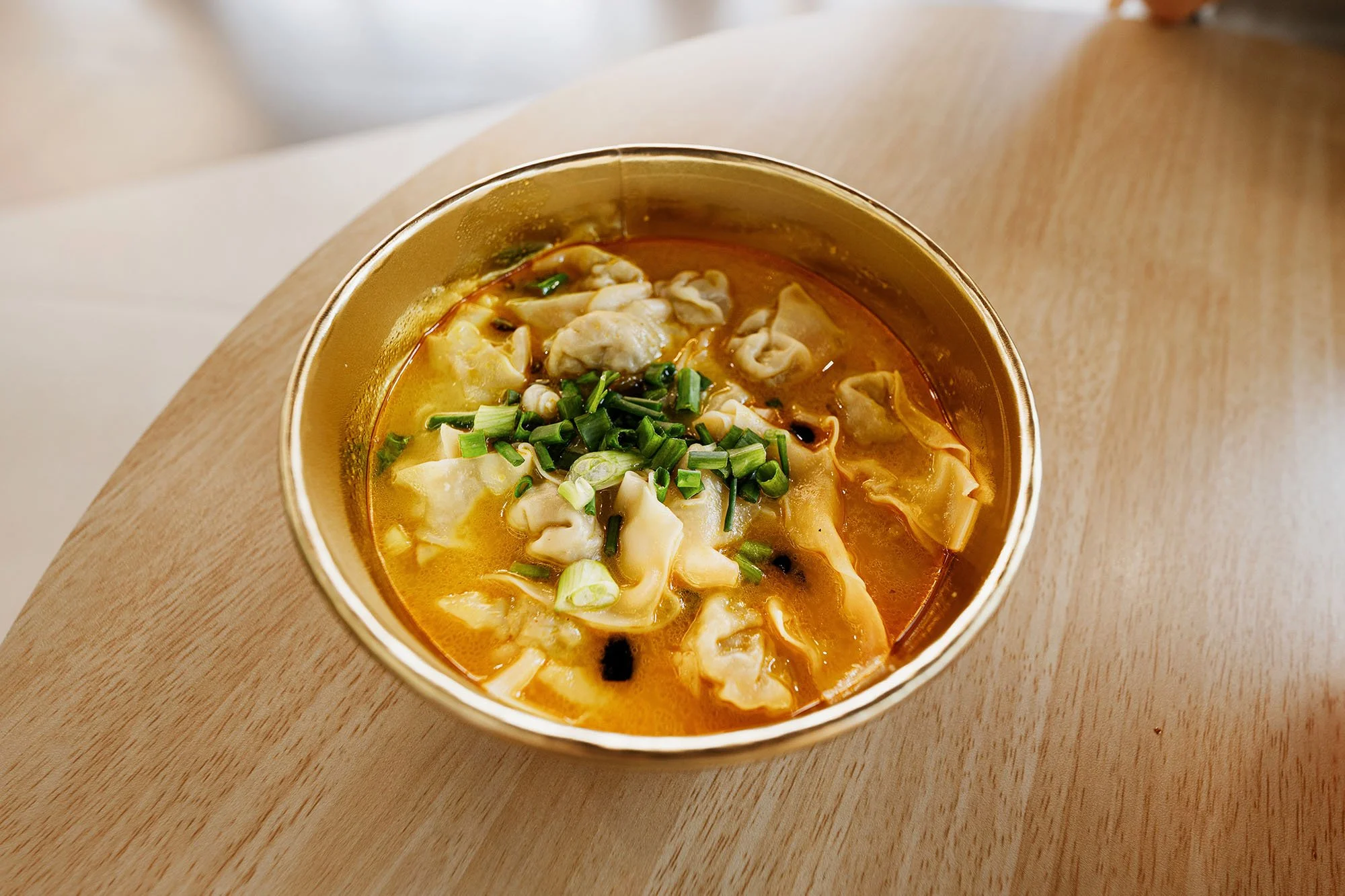
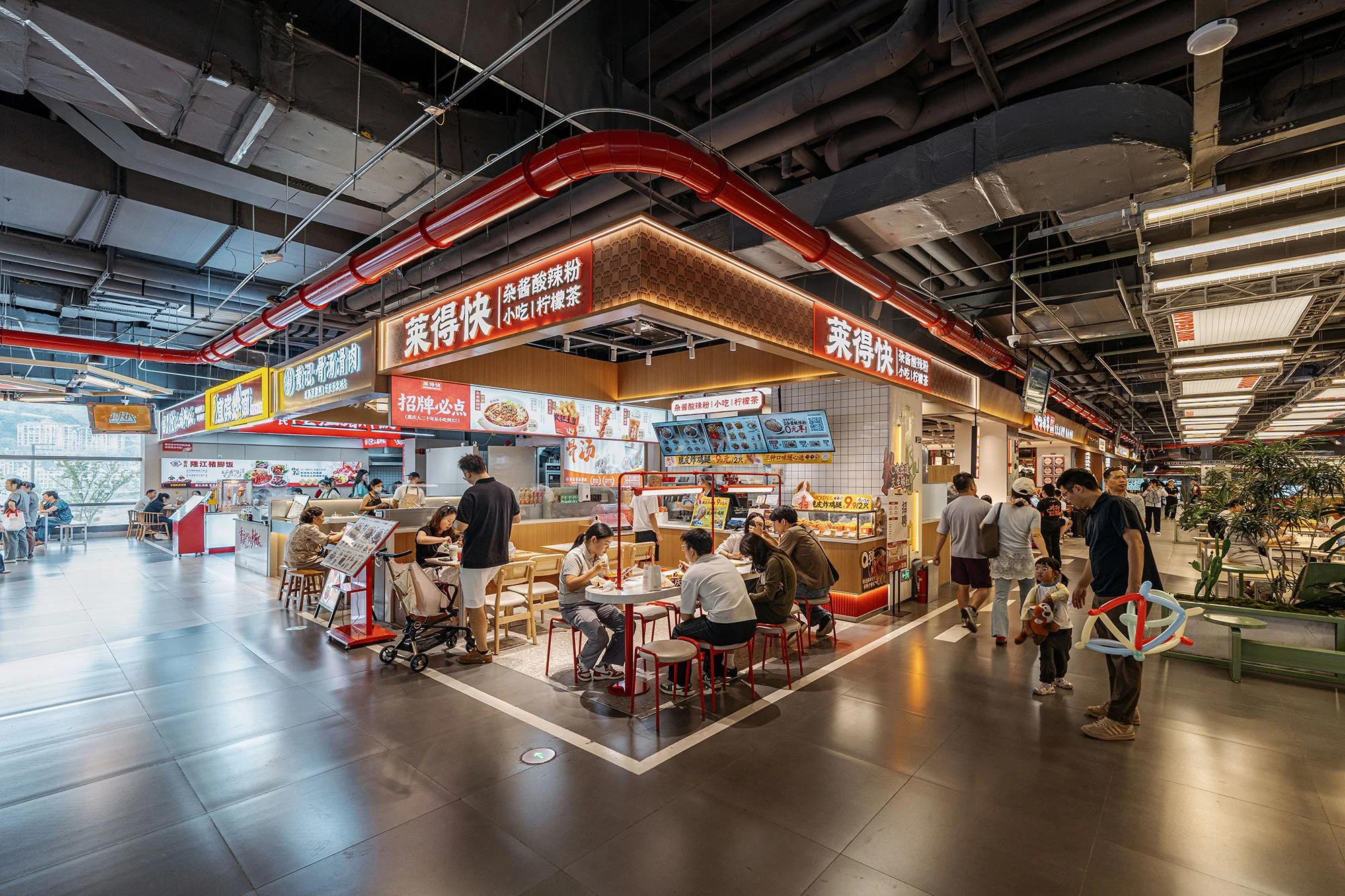
Of all the choices at the Raffles City mall, we decided on Laidekuai, a popular chain restaurant from Chongqing.
We got two delicious bowls of vermicelli noodles and dumplings, both with incredible textures and a great mixture of different flavors and spices.
The mall is big, but it’s towards its southern side and amongst many other food and drink options such as Luckin Coffee and No Yeye No Tea.
Great choice if you’re shopping at the mall and are looking for some easy and tasty local cuisine.
Yu Weixu Zhanggui Jianghu Cai
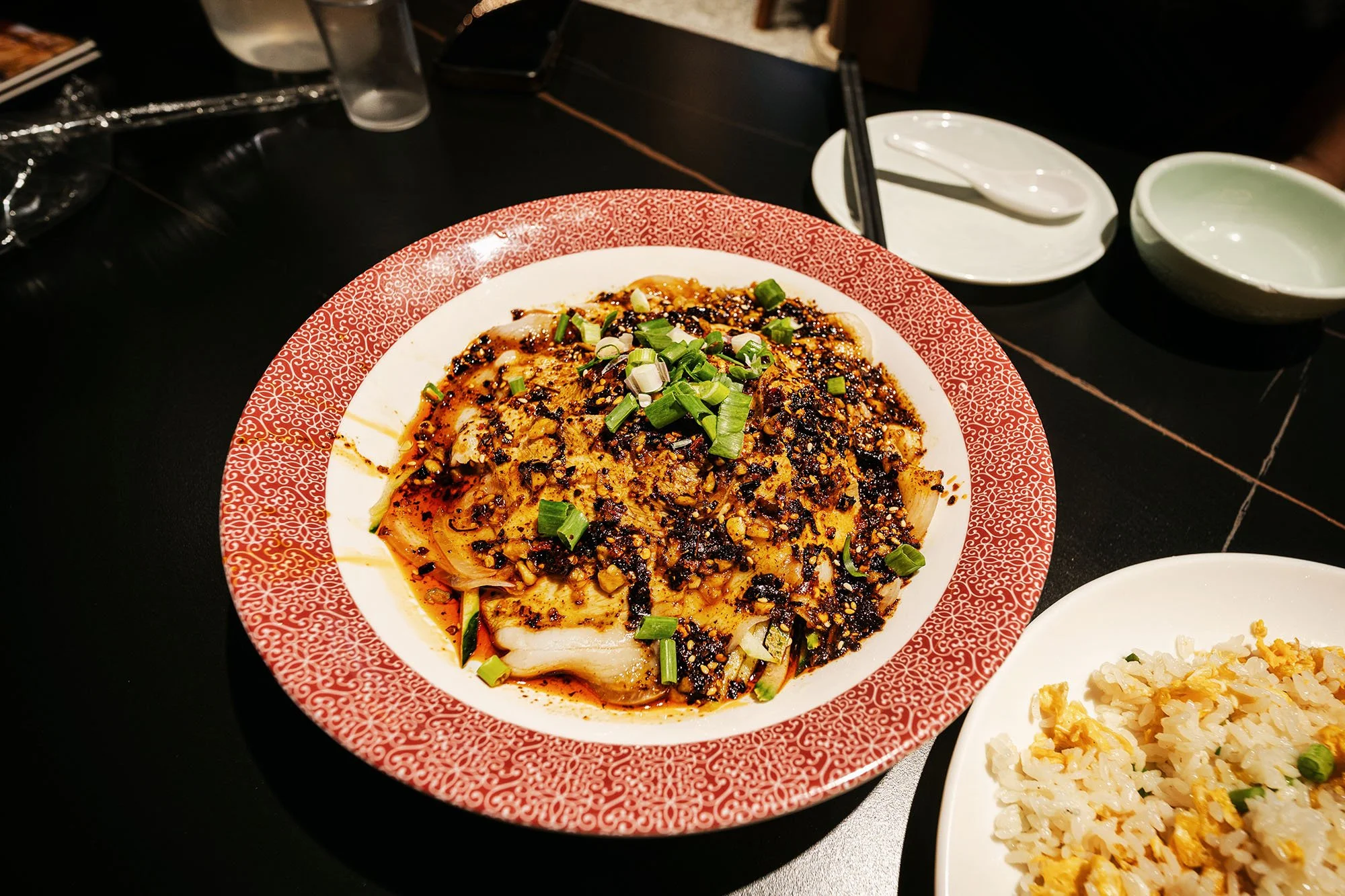
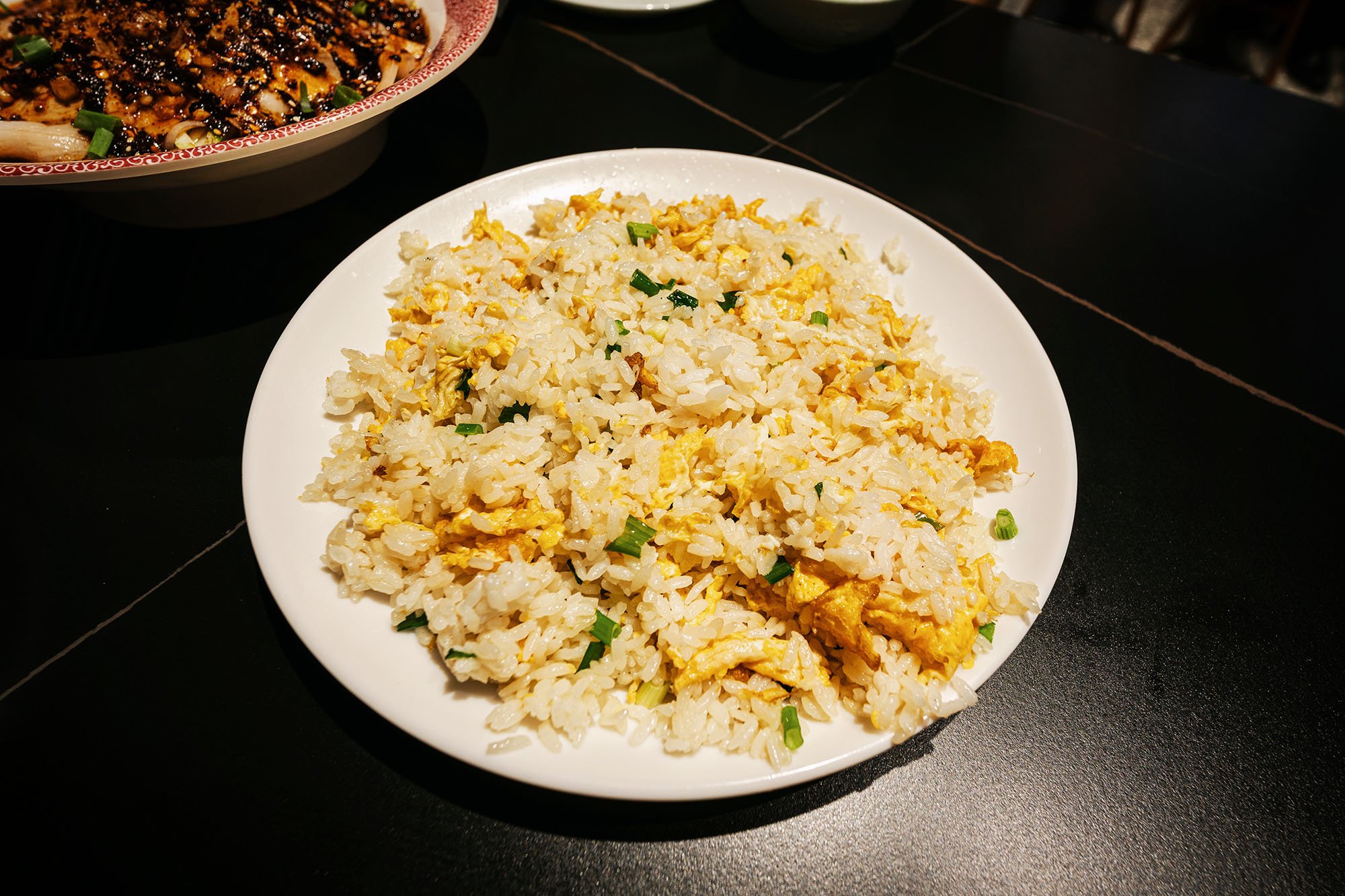
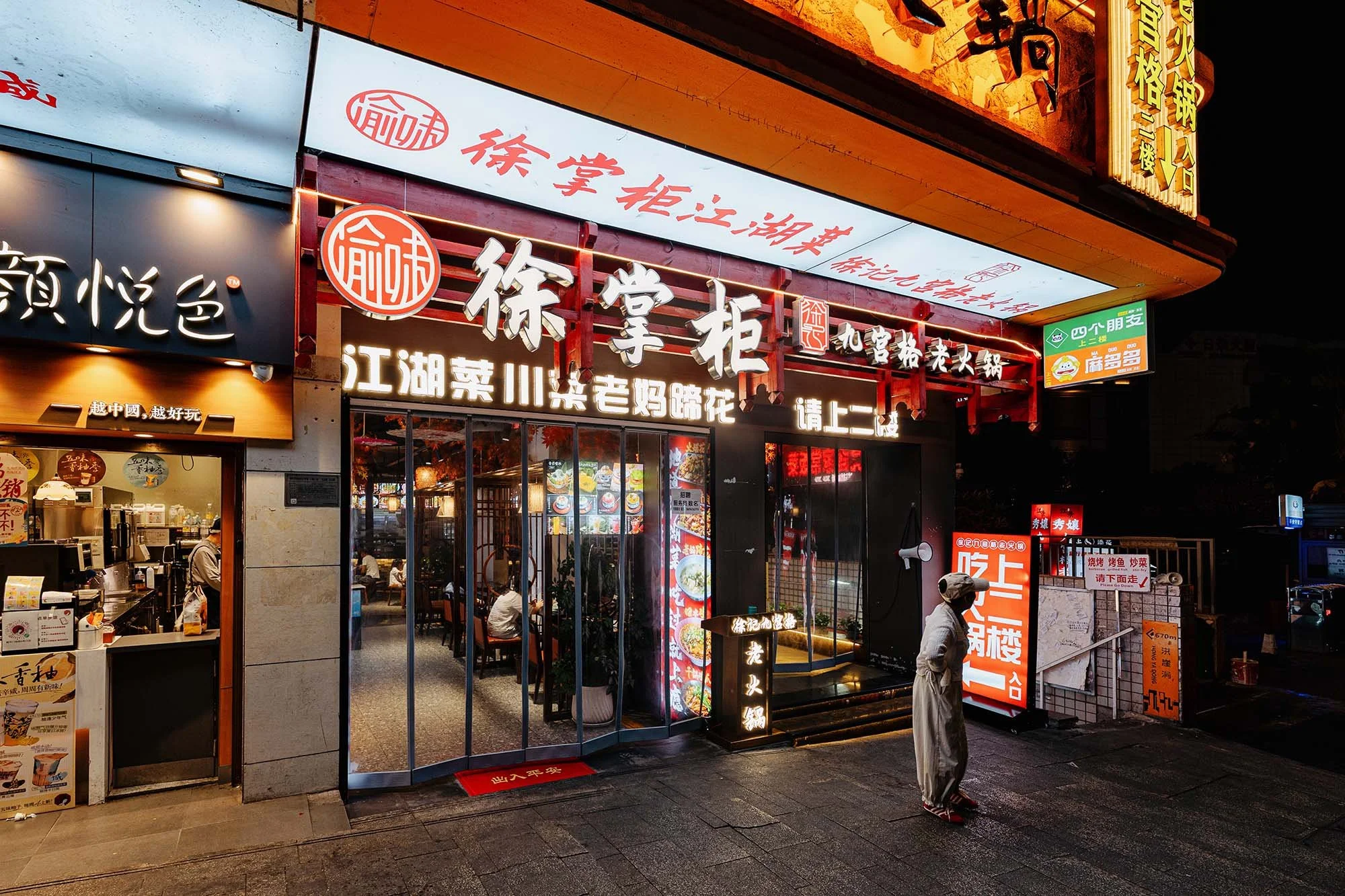
Our first meal was here at Yu Weixu Zhanggui Jianghu Cai, and was a small late night dinner after we got in.
It really set the tone for what to expect in Chongqing: Full-flavored, spicy and loaded with texture. The pork slices on top of cucumber slicers were amazing, packed with chili oil and garlic. The fried rice was more straightforward, but it had an addicting quality to it.
The restaurant is relatively big and due to its convenient location near Raffles City, it had mostly Chinese but also some foreign guests.
This was a great meal to kick off our stay in Chongqing.
Keep in touch:


Often called the “Cyberpunk City” of China, Chongqing combines a 3,000 year history with lights and delicious cuisine.